DANSE MACABRE: THE HISTORY BEHIND CAMILLE
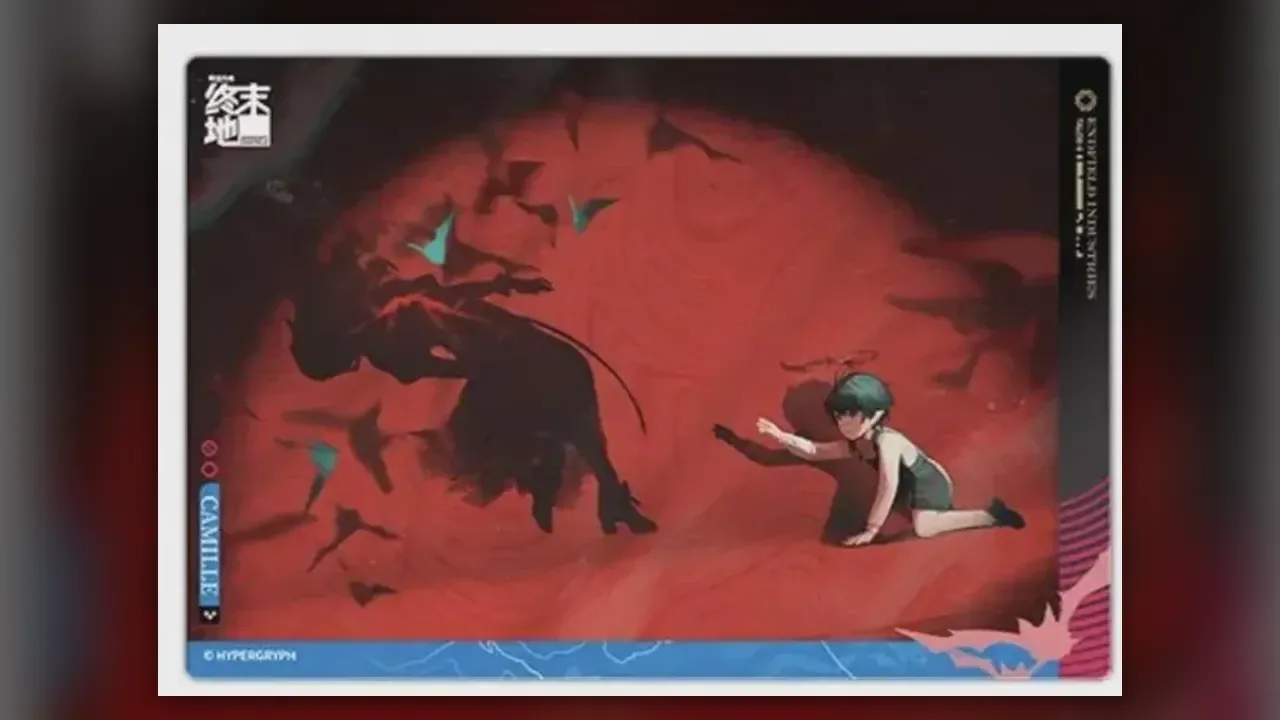
Table of Contents
There’s a particular kind of joy in catching a reference the moment it lands. You see a new character drop, you read the little title attached to their story, and something in the back of your brain lights up because you’ve heard those two words before, just never in a place like this.
That’s exactly what happened to me with Camille.
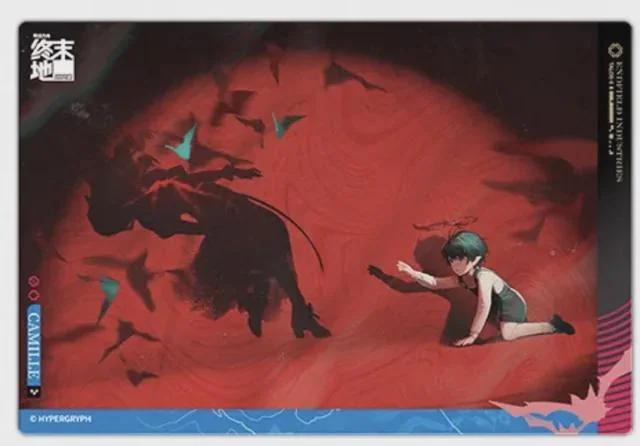
His character story in Arknights: Endfield, the Sarkaz Blood Hunter headlining the Version 1.3 Phase 2 banner, is titled “Danse Macabre.” And the second I read it, I went down a rabbit hole that stretches back nearly six hundred years, through plague pits and cathedral walls, into a Paris concert hall in 1875 where an audience sat in stunned, anxious silence, and finally to one of the most death-obsessed composers who ever lived.
Because “Danse Macabre” isn’t just a moody-sounding phrase. It’s a centuries-old idea with a very specific meaning, and once you understand it, the choice to hang it over the head of a winged vampire who hunts his own kin stops feeling like decoration and starts feeling like a thesis statement.
Let me show you what I mean.
What Is the Danse Macabre, Really?
Before it was a piece of music, before it was a character story, the Danse Macabre, the “Dance of Death”, was a way of coping with the unthinkable.
The motif emerged in late-medieval Europe, with roots reaching into 13th-century poetry and cementing itself in art after the Black Death tore through the continent in the mid-1300s. When something like a third of Europe is dying around you, you need a story big enough to hold the terror. The Danse Macabre was that story.
The imagery is unmistakable once you know it: a procession of skeletons and decomposing corpses leading the living away in a grim, jaunty dance toward the grave. And the genius of it, the thing that made it stick for centuries, is who gets pulled into the dance. Popes. Emperors. Kings and bishops and merchants. Right alongside laborers, children, and beggars.
That was the whole point. The Dance of Death is the great equalizer. Status, wealth, holiness, none of it buys you a single extra step. Everyone takes Death’s hand eventually, and everyone dances to the same tune.
This sat under a single Latin phrase that defined an entire era of European art: memento mori, “remember that you must die.” It wasn’t meant to be morbid for its own sake. In a world where most people couldn’t read, these murals were sermons in paint, urging viewers to live honestly because the end was always closer than it looked.
The earliest known visual version was a now-lost mural painted around 1424–25 in the open arcade of the Holy Innocents’ Cemetery in Paris, where figures from across the social ladder shuffled toward their graves with grinning skeletons. From there the motif exploded across Europe, frescoes in churches, woodcut series, manuscript illustrations, and it never really left us. Every dancing Halloween skeleton you’ve ever seen is a distant descendant of that Parisian charnel-house wall.
Hold onto that core idea, death dances with everyone, and no bloodline is exempt, because it’s going to matter a lot later.
Camille Saint-Saëns and the Sound of Death
Fast-forward roughly four hundred years to 19th-century France, the height of the Romantic period, when composers were utterly obsessed with the gothic, the supernatural, and the morbid.
Enter Camille Saint-Saëns.
Yes, Camille. If you’re already raising an eyebrow at the shared name, you’re not wrong to. We’ll get there.
Saint-Saëns first wrote his Danse Macabre in 1872, not as the orchestral monster we know today, but as a quiet art song for voice and piano, set to a poem by his friend, the French Symbolist poet Henri Cazalis (who often published under the pen name Jean Lahor). The poem paints a winter graveyard at midnight where the dead crawl out of their tombs to dance to Death’s fiddle until the rooster crows at dawn and they sink back into the earth for another year.
Two years later, in 1874, Saint-Saëns reworked the whole thing into a symphonic poem, replacing the human voice with a solo violin, and that’s where it became unforgettable.
How the Music Actually Depicts Death
This is the part that gives me chills every time, because Saint-Saëns didn’t just write about death. He built it into the literal mechanics of the music.
The piece opens with a harp striking a single note twelve times, the twelve strokes of midnight. Then the solo violin enters, and here’s the brilliant, unsettling trick: the violinist is instructed to retune their instrument, dropping the E string down to E-flat. This creates a tritone, the dissonant, unstable interval that medieval musicians literally nicknamed diabolus in musica, “the devil in music.” Death’s fiddle, in other words, is deliberately tuned to sound demonic.
Then there’s the xylophone, an instrument barely used in orchestras at the time, brought in specifically to imitate the dry rattle of dancing bones. And woven through the whole thing is the Dies irae, the ancient Gregorian chant from the Requiem Mass that has been musical shorthand for death and judgment for centuries, here twisted into a mocking little waltz.
Death plays. The skeletons dance. The cock crows. They return to their graves. The piece doesn’t describe the Danse Macabre. It is one.
A Premiere That Horrified Paris
Here’s a detail I love: when Danse Macabre premiered on 24 January 1875 at the Théâtre du Châtelet, plenty of listeners hated it. The screeching mistuned violin, the bones-rattling xylophone, the irreverent Dies irae. It unsettled audiences and drew its share of jeers, even as others applauded hard enough to demand an encore.
It’s now considered one of his masterpieces. But it was born controversial, born to disturb. Worth remembering when a modern studio reaches for that exact title.
Franz Liszt and a Lifelong Obsession with Death
The story doesn’t end with Saint-Saëns, and honestly this next part is where it gets deliciously dark.
Not long after that premiere, the legendary pianist-composer Franz Liszt, who happened to be Saint-Saëns’s friend, made a piano transcription of Danse Macabre (1876). And it’s widely credited as one of the reasons the piece took off and clawed its way into the canon.
But why Liszt, of all people? Because Liszt was, to put it bluntly, fascinated by death to a degree that bordered on the unhealthy.
His catalog reads like a haunted house guest list: the four Mephisto Waltzes, the Faust Symphony, Funérailles, La lugubre gondola (“The Funereal Gondola”), and. Most relevant here, Totentanz, literally “Dance of the Dead,” a thunderous work for piano and orchestra built entirely on that same Dies irae chant. Liszt reportedly conceived it after standing before The Triumph of Death, a monumental 14th-century fresco in Pisa, in 1838. The medieval dance of death and the Romantic-era composer were drawn to the exact same well.
And then there’s the biographical detail that I genuinely can’t stop thinking about. According to the musicologist Alan Walker, Liszt’s definitive biographer, the young Liszt haunted Parisian hospitals, gambling dens, and asylums in the early 1830s, and is even said to have descended into prison dungeons to look upon those condemned to die.
This was a man who went looking for death’s face on purpose.
So when his transcription helped immortalize Saint-Saëns’s Danse Macabre, it was less a favor between friends and more like two artists, separated by a generation, reaching toward the same ancient obsession from different directions. (A quick note for the music-streaming crowd: the Danse Macabre connection runs through Alan Walker the musicologist, not the modern EDM producer of the same name. Easy mix-up, very different vibe.)
Why “Danse Macabre” Fits Camille So Perfectly
Now let’s bring it home, because this is where all that history snaps into focus.
Camille arrives in Arknights: Endfield as the game’s first non-standard male 6-star Operator, a Heat Vanguard wielding a polearm, and everything about his design is steeped in the same imagery we’ve just walked through.
He’s a Sarkaz vampire from the Seš’qa region, a Blood Hunter burdened by a curse written into his very bloodline. He unfurls enormous crimson wings. His official tagline frames him as a hunter stalking a kinsman’s shadow, someone once beloved, now lost. His story quest finally puts a name to that kinsman: Char Arno, the blood relative Camille refuses to let anyone else hunt. And he serves as a Keeper, a figure bound up with death, judgment, and the dead.
Line that up against the meaning of the Danse Macabre and the parallels are almost too neat to be coincidence:
The Danse Macabre is about death as the great equalizer, and Camille is a near-immortal being for whom death is, in a sense, his trade and his curse. The motif drips with imagery of the Devil and the demonic. That “devil in music” tritone, the Mephisto and Faust associations of Liszt, and in Arknights lore the Sarkaz are precisely the race so often likened to demons and devils. The original allegory is obsessed with the dance between the living and the dead, and Camille is a Blood Hunter whose power and story are wrapped around blood, kinship, and loss.
And then there’s the name. Camille. The same given name as Camille Saint-Saëns, the composer of the Danse Macabre itself. A studio with this level of intentionality in its references does not pick a death-haunted classical title and then coincidentally give the character the composer’s exact first name. That’s a wink. That’s a creative team telling you they did the reading.
This kind of layered naming is very on-brand for the franchise, too. Arknights has a long, beloved habit of burying its characters’ identities in real-world music, science, and history references for fans to excavate. “Danse Macabre” is just an unusually rich vein.
What the Name Might Be Telling Us
Here’s where I want to be honest with you: this section is speculation, and I think that’s part of the fun.
If a creative team deliberately frames a character around the Danse Macabre, they’re setting expectations. The motif’s entire emotional core is mortality, inevitability, and the way death visits everyone regardless of how powerful or proud they are. Saint-Saëns’s piece carries the Devil, midnight, the rising dead, and the cold dawn that ends the dance. Liszt’s parallel obsession adds judgment, damnation, and the seductive pull of the macabre.
Read against Camille’s setup, a cursed bloodline, a hunt that turns on his own kin, a tragic figure pulled toward loss, I’d wager his story leans hard into themes of death, grief, and the impossibility of escaping what’s written in your blood. The “dance” he’s caught in may be one he can slow but never truly leave, which is exactly the lesson the medieval murals were trying to teach.
Could the studio underbake it? Of course. A clever title is a promise, not a guarantee, and plenty of great references hang over thin stories. But the intent in the naming is unmistakable, and that intent is worth getting excited about even while we keep our expectations grounded.
The Dance Goes On
What I find most beautiful about all of this is the throughline. A medieval painter trying to make sense of the plague. A 19th-century Frenchman tuning a violin to sound like the devil. A Hungarian virtuoso wandering through asylums and dungeons in search of death’s expression. And now a video game character, centuries later, inheriting that same two-word phrase and everything it carries.
The Danse Macabre was always about continuity, the idea that the dance never stops, that it simply pulls in new partners across the generations. There’s something fitting about it being handed down one more time, from cathedral wall to concert hall to a winged hunter with a cursed name.
So the next time a character, a song, or a piece of art reaches for those two words, you’ll know they’re not just being atmospheric. They’re joining a dance that’s been going for six hundred years.
And if you listen closely, you can still hear the fiddle.
Related reading: For the numbers-and-kit breakdown of Camille’s polearm, his racial hybrid lore, and his Phase 2 banner projections, see our Camille deep dive. For the full 1.3 patch context surrounding his release, the Sketches of Lost Heirlooms livestream recap covers everything that lands alongside him. And if you’re choosing between him and Mi Fu, the head-to-head pull decision breaks down who gets your Oroberyl.
For the operator behind the title, with his kit, stats and full profile records, see the Camille operator page.
Did you catch the Saint-Saëns connection before reading this? I’d love to hear which other hidden references you’ve spotted, drop your favorites in the comments, and tell me what you’re hoping Camille’s story actually delivers.
Take a Break
Available on desktop