NEFARITH'S RETURN: ARDASHIR'S VESSEL REVEAL
Table of Contents
Version 1.4 “Homecoming” was billed as a reunion patch, and it delivered one nobody was ready for. Nefarith is back, and the first thing she does is kill Ardashir. On paper that should close the biggest loose end the Wuling arc left dangling: the enigmatic Terran who commanded her, the man behind The Foundation, struck down by his own former subordinate. Then Si speaks, and the whole scene inverts. The body Nefarith destroyed, she says, was only Ardashir’s vessel. Call it his “meat” if you want to be blunt about it. It was never his true form. If you have been following this story since Valley IV, that single line reframes years of buildup and turns a clean kill into the opening move of something much larger. This is a lore deep dive, not a pull guide. We are going to separate what the 1.4 story actually shows from what it only implies, and work out what “true form” could mean for a character we thought we finally understood.
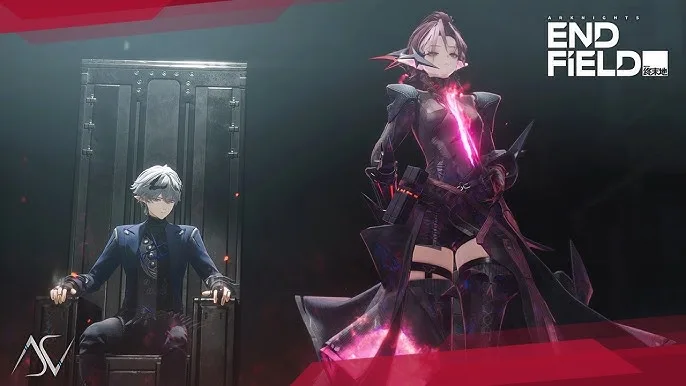
Nefarith and Ardashir at the heart of the Homecoming confrontation, the moment the vessel reveal reframes into something far bigger than a simple kill.
TL;DR - Key Points
- Nefarith returns in Version 1.4 and kills Ardashir. The former enforcer strikes down the very figure who once gave her orders, a full reversal of the Wuling power dynamic.
- Si reveals the kill was hollow. The body that fell was a vessel, a host Ardashir was wearing, not the entity itself. His true form was never in the room.
- This is Si’s role, not a throwaway line. As the 13th Sui Proxy stepping into her true form at Yinglung Pass, she is exactly the kind of being who can see what a human eye cannot.
- “Vessel” is established Endfield machinery. Reconveners, read-write hosts, and Feranmut proxies all treat the body as a container for something that outlives it.
- Ardashir was always coded as more than a man. Sargon-linked memories, snow and barnacle references, and authority over Nefarith never fit a simple Terran traveler.
- Nefarith’s motive is now the real mystery. Rebellion, liberation, or a scripted step in Ardashir’s own plan all remain on the table.
- Treat the “true form” as open lore. The reveal that the body was a vessel is the story beat. What the vessel contained is analysis, and we flag it clearly below.
Where Nefarith’s Story Left Off
To feel the weight of this reunion you have to remember how the last one ended. Nefarith was the mastermind behind the Bonekrusher pressure on Wuling, a Boss-tier threat the game gave three distinct forms across her fights. She was powerful, she was patient, and she was losing. The climax of the Wuling arc saw the Endministrator finally pin her down with an Originium Arts trap at the Marker Stone, after an earlier attempt in Valley IV had failed. She went into 1.4 as a beaten, contained problem.
The detail that matters most now is the one that was easy to skim past at the time. Nefarith did not answer only to herself. The story was explicit that Ardashir “can even order Nefarith around,” placing him above her in whatever chain of command The Foundation runs on. She was the visible hand. He was the will behind it. Our Version 1.2 Wuling lore deep dive walks through that finale and the first real look at Ardashir’s Sargon connection, and it is the cleanest starting point if you need the full recap before this reveal lands.
So when 1.4 opens with Nefarith not just free but lethal, and lethal specifically toward Ardashir, the shock is not only that she survived. It is that she turned on the one person the old story told us she obeyed.
Homecoming and Yinglung Pass: the Stage for the Reunion
The setting is not an accident. Version 1.4 pushes the story into Yinglung Pass and the North Wuling Exclusion Zone, the boundary region the game has been foreshadowing since the Wuling arc closed with its talk of a catastrophe in the North. This is frontier country, a place where the ordinary rules of Talos-II thin out and the stranger layers of the setting bleed through.
That environment is doing thematic work. Yinglung Pass is also where Si, the 13th Sui Proxy, was set to reveal her true form, and where the game promised she had “been waiting for the Endministrator.” Homecoming puts two “true form” reveals in the same geography: a Feranmut fragment stepping into her real shape, and an enemy whose real shape turns out to have never been present at all. The patch frames identity as the through-line. Who you appear to be, and what you actually are, are treated as two different questions, and Yinglung Pass is where the gap between them gets exposed.
Put a pin in that pairing. It is the strongest structural hint the writers give you that Ardashir’s vessel reveal is meant to rhyme with Si’s, not sit off on its own.
The Kill: Nefarith Turns on Ardashir
The beat itself is brutal and fast. Nefarith returns and she does not negotiate. She kills Ardashir, or rather she kills the figure everyone in the scene, and everyone in the audience, has spent the whole arc treating as Ardashir. For a moment it plays as the ultimate payoff: the servant destroys the master, the mystery man behind The Foundation is dead, and the biggest antagonist thread of the era snaps shut.
The reason it reads as such a reversal is the power dynamic we just laid out. This is not a rival taking out a rival. This is the enforcer executing her commander. Whatever leash Ardashir held over Nefarith is either gone or was never as real as the earlier story implied. That alone reframes her. A Nefarith who can turn on Ardashir is either far stronger than her Wuling showing suggested, or she was always operating on a longer plan than “loyal Bonekrusher enforcer.”
And then, before the moment can settle into triumph or tragedy, Si refuses to let the scene mean what it looks like it means.
Si’s Revelation: the Body Was Only a Vessel
Si’s line is the hinge of the entire sequence. What Nefarith killed, she says, was a vessel. A body Ardashir occupied and could discard. His “meat,” to use the unsentimental read of it, not the entity that had been steering The Foundation. The corpse on the ground is real. The death of Ardashir is not.
This lands harder because of who is delivering it. Si is not a bystander guessing. She is the 13th Sui Proxy, a fragment of a sealed Feranmut god, a being whose entire nature is about consciousness existing apart from a single fixed body. When a creature like that tells you a body was just a container, she is speaking from the one perspective in the setting that would actually recognize the trick. She has form-hopped and manifested through proxies and Ink Spirits herself. Our lore deep dive on Si and the Sui proxies lays out why a “true form” reveal is central to her whole character, and that is exactly the lens she brings to Ardashir here.
There is also a neat piece of continuity underneath it. Si has been intervening from the shadows for a long time, and she was present, in spirit form, when Ardashir moved against Wuling before. She has watched this entity operate. So when she looks at the fallen body and says it is not him, that is not a hunch. That is recognition.
What “Vessel” Means in Endfield
Here is why the reveal is convincing rather than a cheap twist: Endfield has been building the machinery for it since launch. The body-as-container idea is not new to Ardashir. It is one of the setting’s core devices, and the game has given us several flavors of it already.
| Vessel concept | What it is | Who it applies to |
|---|---|---|
| Reconvener | An imperfect body rebuilt from corrupted Originium data, hosting a restored consciousness | Warfarin’s project, the restored Terran-era identities |
| Read-write host | A living body running a consciousness that is anchored elsewhere on a network | The Amiya and Civilight Aeterna framing |
| Feranmut proxy | A humanoid avatar walking the world as an incarnated fragment of a sleeping god | Si and the twelve original Sui proxies |
| Ardashir’s vessel | A worn body the entity can occupy and abandon without dying | The 1.4 reveal, still undefined in specifics |
The pattern across all of these is the same: the self is the data, the identity, the anchor, and the body is disposable hardware. Our Amiya fate and Precursor legacy analysis digs deep into the read-write host concept and the idea of a consciousness that a body merely carries, and it is the closest existing parallel to what Si is describing. Once you accept that Endfield already runs on this logic, “Ardashir wore a body” stops being a shock and starts looking like the reveal the whole system was built to support.
The game even has a line, buried in its own dialogue, of an entity speaking of “my vessel” who “hath fulfilled his wish and shall now take my stead.” Whether or not that specific speaker connects to Ardashir, the concept of a being that treats a human host as a temporary role is baked into the writing.
Who, or What, Is Ardashir’s True Form?
This is where we cross from story fact into analysis. The 1.4 reveal is that the body was a vessel. What the vessel contained is not spelled out, so the following are readings, not confirmations. Treat them as the leading theories, ranked by how much existing lore supports them.
| Theory | The case for it | The problem |
|---|---|---|
| Sargon revenant | Ardashir carries memories “linked to the nation of Sargon” and speaks in an archaic register; an ancient will wearing modern flesh fits cleanly | Sargon is a Terran nation, and Terra-to-Talos-II passage usually runs through Reconvener tech, not raw possession |
| Kharandu Khagaan tie | His references to snow and barnacles were already flagged as pointing at that legendary figure; a legend does not die with a borrowed body | The connection is still a hint, not a stated identity |
| Feranmut-adjacent entity | The vessel logic mirrors how Feranmuts and their proxies work, and Si recognizing the trick suggests a like-for-like being | No text calls Ardashir a Feranmut; the resemblance may be structural, not literal |
| The Foundation’s architect | If The Foundation is his instrument, the “true form” may be less a body than a distributed purpose that no single kill can end | Vague by design; hard to disprove and hard to confirm |
The most grounded reading is that Ardashir is an old, Sargon-linked will that has been inhabiting a human shell, which is why “everything he does is for the survival of Civilization” always sounded larger than one man’s politics. A being playing a very long game does not mind losing a body. The least grounded, but most interesting, is that his “true form” is closer to a Feranmut-tier entity, which would explain why it takes another god-fragment to call out the disguise.
The Foundation Angle: Why the Body Was Expendable
The vessel reveal also recontextualizes The Foundation itself. Ardashir leads a group whose members are turning up as an entirely new enemy classification, the Foundite, introduced through the Version 1.4 boss Alleikhreos. Our Alleikhreos boss lore and combat intel breakdown covers that reveal card and the “creation of the Foundation” framing in detail.
Line those facts up and a shape appears. The Foundation builds things. It makes veterans of countless battles like Alleikhreos, it operates across the Ætherside, and its leader treats his own body as one more piece of expendable equipment. An organization run by an entity that discards vessels is an organization that does not fear individual death, including its own commander’s. That is a genuinely dangerous posture for an antagonist faction, because it removes the usual win condition. You cannot decapitate a movement whose head can regrow somewhere else.
It also makes Nefarith’s kill legible in a darker way. If Ardashir can shed a body at will, then letting Nefarith destroy that body may cost him nothing he was not prepared to spend.
Nefarith’s Motive: Pawn, Double-Cross, or Liberation?
So why did she do it? The reveal that Ardashir survives his own death does not tell us what Nefarith intended, and her motive is now the more interesting open question. There are three readings, and the story leaves room for all of them.
- Genuine rebellion. Nefarith spent the Wuling arc taking orders. Killing Ardashir could be a real bid for freedom, an enforcer deciding she is done being commanded. The tragedy of this read is that she “won” a fight that killed nothing.
- A scripted step. If Ardashir plans in bodies the way others plan in moves, Nefarith’s strike may be exactly what he wanted, a controlled shedding of a vessel that had outlived its usefulness. In this read she is still a pawn, just a pawn who thinks she has gone off-script.
- Liberation with a cost. Somewhere between the two, Nefarith may have acted to free herself and unknowingly served his design at the same time. Both things can be true, and Endfield tends to like endings where a character’s agency and their manipulation are impossible to fully separate.
Which one the story commits to will define whether Nefarith becomes a tragic figure, a wildcard third party, or a returning antagonist in her own right. Right now she is all three at once.
Reading the Reveal by Player Type
How much this beat matters to you depends on why you play.
- Lore readers get the richest payoff. The vessel reveal ties Ardashir into the setting’s deepest identity mechanics and pairs him with Si’s own transformation. This is prime theory-fuel and it rewards rereading the Wuling arc with the twist in mind.
- Theorycrafters should treat this as a confirmed premise (body is a vessel) with an unconfirmed variable (what the true form is). That is the ideal shape for speculation: a fixed anchor and an open target. Watch for any line that names what Si actually recognized.
- Returning players coming back for Homecoming get a clean re-entry point. You do not need every 1.3 side story to feel this. “Nefarith is back, she killed the villain, and it did not take” is a hook that stands on its own and pulls you into Yinglung Pass immediately.
- Story-skippers should at least register that Ardashir is not gone. If you file him under “dead antagonist,” you will be lost the moment he resurfaces, and every sign points to him resurfacing.
Common Misreads to Avoid
A twist this compact is easy to get slightly wrong, and the slightly-wrong version will steer your theories off a cliff.
- “Ardashir is dead.” No. That is the entire point of Si’s line. A body died. The entity did not. Treating him as a closed chapter is the single biggest mistake you can make here.
- “Nefarith is free now.” Maybe. Or maybe she did exactly what Ardashir needed. Her freedom is a question the story has not answered, not a fact it has stated.
- “Vessel means Reconvener.” Not necessarily. Reconveners are a specific Originium-data process. A worn-and-discarded host is a related but distinct idea, and conflating them will make you predict the wrong mechanism for his return.
- “Si is just narrating.” She is a Feranmut fragment identifying something in her own domain. Her recognition is evidence about what Ardashir is, not a neutral voiceover.
- “The true form is confirmed.” It is not. The vessel reveal is canon. Everything about what the vessel held is, for now, analysis.
Reveals That Would Confirm It
A handful of upcoming details would turn the theories above into text. These are the ones worth watching as the Homecoming story continues.
- Any name Si puts to what she saw. If she calls it a Feranmut, a Sargon relic, or anything specific, the “true form” question collapses in one line.
- Ardashir resurfacing in a new body. The clearest possible confirmation of the vessel mechanic is simply watching him do it again.
- The Foundation’s origin. Learning what The Foundation actually is, and what it was founded to preserve, will likely explain why its leader treats bodies as disposable.
- Nefarith’s next move. Whether she hunts him again, allies with the Endministrator, or vanishes will tell us which of her three motives was real.
- The snow-and-barnacle thread. Any further Kharandu Khagaan reference would promote that theory from footnote to frontrunner.
Final Read
Homecoming looked like a reunion patch and functioned like a foundation-shaking one. Nefarith’s return gave us the catharsis of a villain struck down, then Si took it away in a sentence. Ardashir is not dead, because the thing everyone called Ardashir was only the shape he was wearing. That reframes him from a mystery man into a mystery entity, ties him into the same vessel-and-consciousness logic that runs through Reconveners, proxies, and read-write hosts, and quietly promotes Nefarith from beaten enforcer to genuine wildcard. The body on the ground closed one question and opened three bigger ones. What is Ardashir really, what did Nefarith actually accomplish, and what is The Foundation building toward. Yinglung Pass gave us the reveal. The answers are still walking around in a form we have not seen.
FAQ
Is Ardashir actually dead after Version 1.4?
No. Nefarith destroys the body he was inhabiting, but Si reveals that body was only a vessel, not his true form. The entity that was acting as Ardashir survives the kill.
What does Si mean when she calls the body a “vessel”?
She means Ardashir was occupying a host body rather than being that body. In Endfield’s logic the self is the consciousness or identity, and the body is a disposable container, so destroying the container does not destroy the entity.
Why did Nefarith kill Ardashir?
The story does not spell out her motive. It could be genuine rebellion against the figure who commanded her, a step Ardashir wanted her to take, or a bid for freedom that unknowingly served his plan. All three readings are still open.
Who is Si and why does her word carry weight here?
Si is the 13th Sui Proxy, a fragment of the sealed Feranmut god Sui, revealing her true form at Yinglung Pass in 1.4. As a being whose own nature is consciousness existing apart from a fixed body, she is uniquely able to recognize when a body is just a shell.
Where does this reveal happen?
In the Version 1.4 “Homecoming” story, set in Yinglung Pass and the North Wuling Exclusion Zone, the frontier region north of Wuling that the earlier arc had been foreshadowing.
What is Ardashir’s true form?
That is not confirmed. The leading theories are an old Sargon-linked will, a tie to the legendary Kharandu Khagaan, or a Feranmut-adjacent entity. The vessel reveal is canon, but the nature of the true form is still analysis.
How does this connect to Reconveners?
Both treat the body as a container for a persistent identity, but they are not the same. Reconveners are rebuilt from corrupted Originium data through a specific process, while Ardashir’s vessel is a host he occupies and discards. They are related ideas, not identical ones.
Does this make Nefarith a good guy now?
Not necessarily. She struck down an antagonist, but her own goals are unknown, and she may have served Ardashir’s plan by doing so. She is best read as a wildcard rather than a new ally.
What is The Foundation’s role in all this?
The Foundation is Ardashir’s organization, and its members are surfacing as the new Foundite enemy class introduced by the 1.4 boss Alleikhreos. A faction led by an entity that discards bodies is one you cannot defeat by killing its leader, which raises the stakes considerably.
Will Ardashir come back?
Every sign points to yes. The entire purpose of the vessel reveal is to tell you the death did not stick, so his return in a new form is the most likely direction the story takes next.
Related Reading
- Version 1.2 Wuling lore deep dive — Nefarith’s fall and the first look at Ardashir’s Sargon connection.
- Si and the Sui proxies lore deep dive — why a “true form” reveal is central to Si’s whole character.
- Alleikhreos, Chiliarch boss lore and combat intel — The Foundation, the Foundite enemy class, and the Ætherside.
- Amiya’s fate and Precursor legacy — the read-write host concept and consciousness that outlives a body.
- Feranmut proxies and the Wuling hegemony — the political and cosmic weight of Feranmut beings on Talos-II.
Take a Break
Available on desktop