WHY DO ENDFIELD'S MACHINES HAVE ANGEL HALOS?
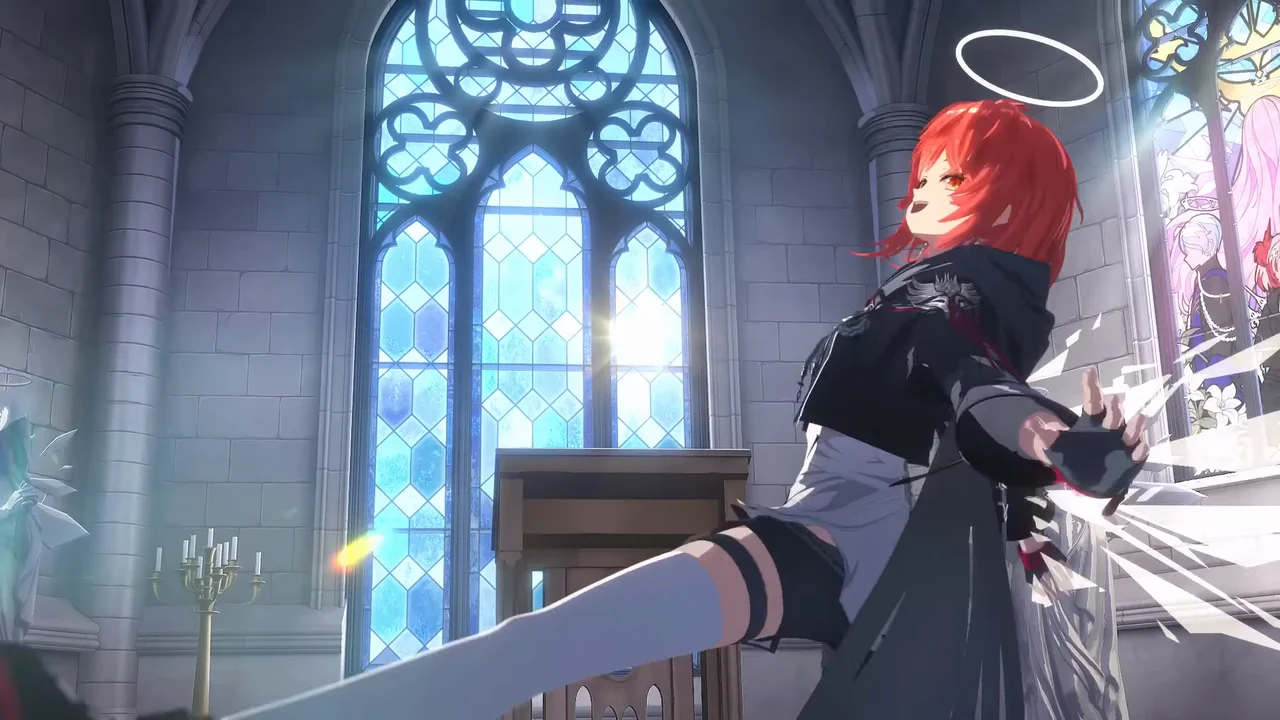
Table of Contents
Endfield never says why the Aggeloi have halos. In Arknights’ The Masses’ Travels, the Sankta’s god, the Law, turned out to be a Precursor machine called PCS, meant to grant halos to everything. Endfield’s encyclopedia names PCS.
On Talos-II, humanity’s oldest enemy is the Aggeloi, machines built out of rock and soil. Every one of them has a glowing ring floating over its head, and as long as that ring stays lit, the machine can rebuild itself. In the first Arknights, a ring like that meant one thing. It was the halo of the Sankta, the angels of Terra, and the Sankta believed their god gave it to them and only them. Then, in a 2025 Arknights story, a courier named Exusiai found out what their god really was, and helped bring it down. More than a century later, the Sankta on Talos-II still tell that story at morning prayer, and one of them kneels beside a dying Aggelos and asks it: “who was the one that made you?” This post follows our long-form video section by section, from Exusiai’s first word to that battlefield on another planet.
How we checked this: every quote comes from the game text of the original Arknights (the story text of the event The Masses’ Travels, its official chapter summaries, and operator files, voice lines and modules) and of Arknights Endfield (the in-game encyclopedia, operator files and voice lines, training material and weapon archive stories). Where the game’s own lines use dashes, we cut the quote at that point instead. Where we connect facts the games don’t connect, we say it is our reading. Images are frames from our video; the art and footage in them belong to Hypergryph, Yostar and Gryphline. Endfield Hub is a fan site, not affiliated with Hypergryph, Yostar or Gryphline.
TL;DR
- A Sankta halo lights up with a baby’s first word. It carries empathy, the Sankta’s sense of each other’s feelings, and Laterano’s one great law is that no Sankta may raise a gun against another.
- In The Masses’ Travels (Arknights, 2025), the halos go out across Terra, Laterano falls into a shared dream, and a shrine starts giving halos to people who aren’t Sankta.
- The Law was a machine: a ring called PCS, “Personality and Cognition Synchronization system”, built by an older civilization. Its purpose was “to grant halos to all organic and inorganic matter.” Its last command was to kill itself.
- A new angel rose from its wreck and circled the planet “like a shooting star destined to never fall”.
- Endfield names the machine. Its encyclopedia calls the Sankta “A Sarkaz race whose cultural identity was changed by the Precursor’s ‘Personality and Cognitive Synchronization’ (PCS).”
- On Talos-II the Sankta’s church, the Cabal of Tranquility, keeps a captured Aggelos called Shatterus and studies how the Law and the Aggeloi are linked.
- Neither game says why the Aggeloi have halos, or whether the Law and its new angel have anything to do with them.
What Is a Sankta Halo?
What is Laterano?
Arknights takes place on a world called Terra. One of its countries is Laterano, a holy city run by a church. One investigator puts its size at “six million Laterans”, and its hymn calls it “Laterano, holy city of white”. At the top is the Pope, and under him a church government called the Curia. The whole faith is built on something the Laterans call the Law, and they call their city Paradise. A gun-knight speaks of “The centuries-long peace of the Holy City.” Its people are the Sankta. They look human, except for a glowing halo over their heads and wings of light on their backs. Exusiai’s file says “Even with a halo and wings, people often forget Exusiai is a Lateran.”
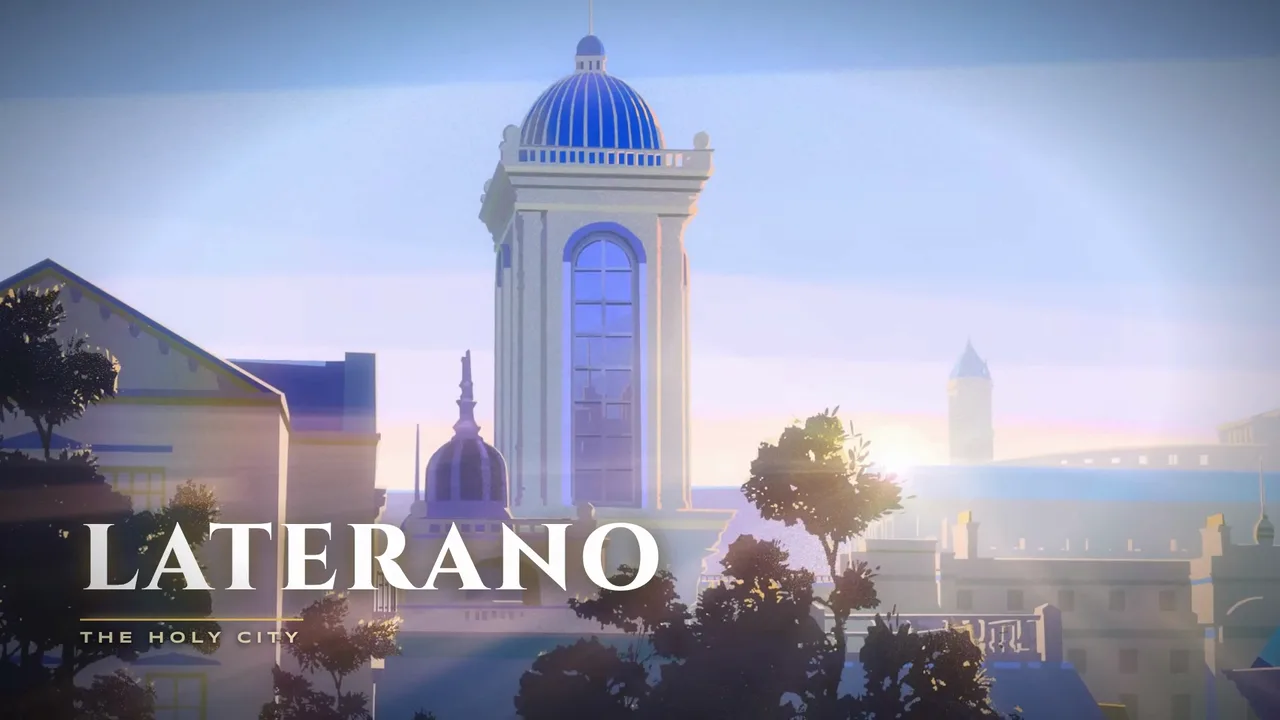
Laterano is also the country of guns. Exusiai’s file says “The gun is a unique mid and long-range weapon rumored to have been discovered by Laterano, thereby becoming one of its symbols,” and “Everyone now carries at least one for personal protection.” Every Sankta has a patron firearm. In Exusiai’s words: “We angels all have a patron firearm, a special gun we grow up with”. She got hers from a gunsmith: “Master Pag put the assembled gun in my hand, and we took a picture together in front of a saint’s statue.”
Explosions are part of everyday life too. A school headmaster lists one of hers: “School cafeteria explosion, caused by a bag of flour you dropped from the floor up.” Another time she skipped class “to fly a kite on top of the Basilica”, Laterano’s great church, and “accidentally caused an explosion”. Her sister has a saying for it: “as they say back in Laterano, ‘an explosion unseen is an explosion clean’.”
She was a good student, though. “There are almost as many confessionals in the Holy City as there are dessert carts,” the event says, automated booths that drive around the streets so anyone can confess on the spot. “Sins could range from the shame of consuming too much sugar, to the crime of betraying one’s kin or bringing harm to one’s people.” At school, Exusiai’s proposed upgrades to these confessionals “helped her earn first place in her faith assistive engineering class”.
When does a Sankta get a halo?
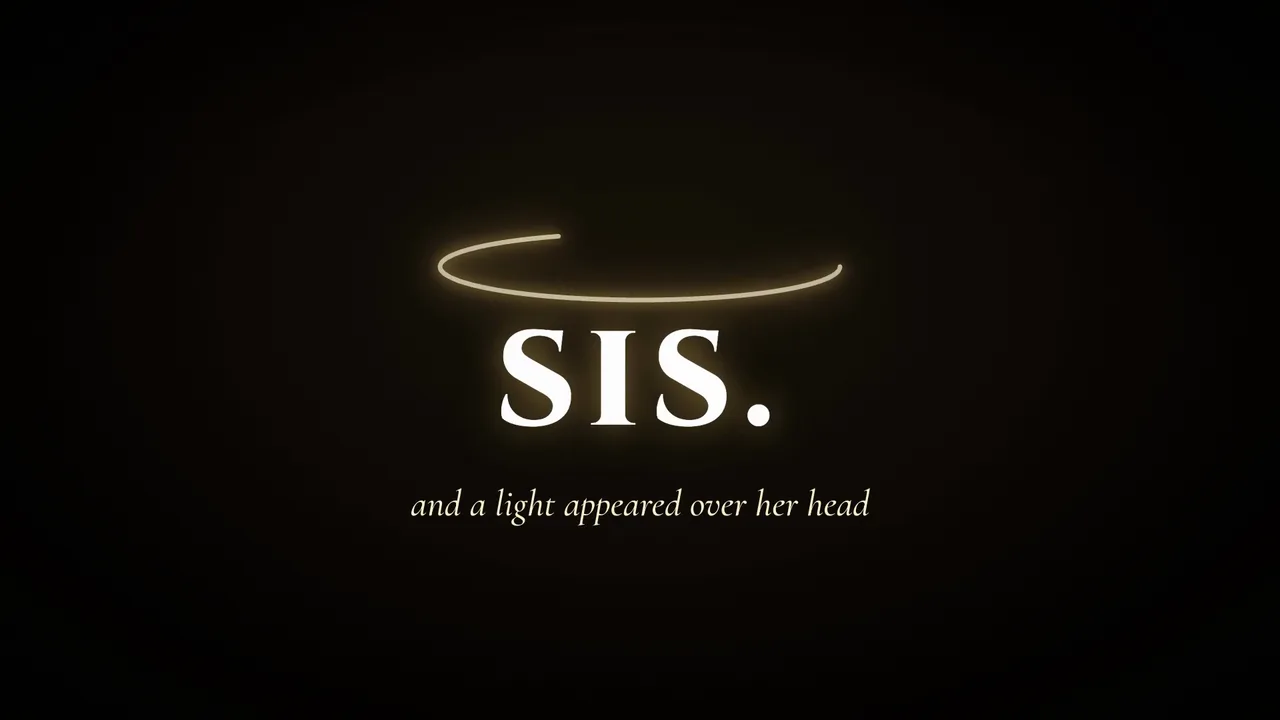
A Sankta’s halo doesn’t appear at birth. It lights up when a baby says its first word. Exusiai remembers hers in a letter to her older sister, Lemuen. Her parents and Lemuen were next to her crib, “betting on what my first words would be”. Lemuen was watching too, a little uneasy: “To you, I was the stranger in the family…” Exusiai felt that unease as if it were her own. “The next instant, I heard my own voice say, ‘Sis,’ and this light began to appear above my head.”
That feeling is the halo’s other gift. The Sankta call it empathy. Exusiai puts it simply: “Empathy lets us sense the emotions of our people. It lets me know if the ones by my side are happy or sad.” It’s strongest among other Sankta. Far from Laterano, her file says, she was “away from her kin, her empathy and Signa Creditorum useless”.
What is a fallen angel in Arknights?
The halo comes with one law above all the others. A Church official says it plainly: “Any Sankta who raises their patron firearm against one of their own must be judged by the Law and be expelled from Paradise.” Such a Sankta becomes what Laterano calls a fallen angel. Their halo and wings dim or break, and they lose the empathy that connects them to their people. In the game, fallen angels like Mostima and the enemy Fortuna also have black horns (“With her dimmed halo and black horns, paradise has closed its doors on her”), though no line says the fall itself grows them. A fallen angel hands over the gun (“handing over your guardian gun to the authorities”, as Mostima puts it), loses citizenship and leaves the city.
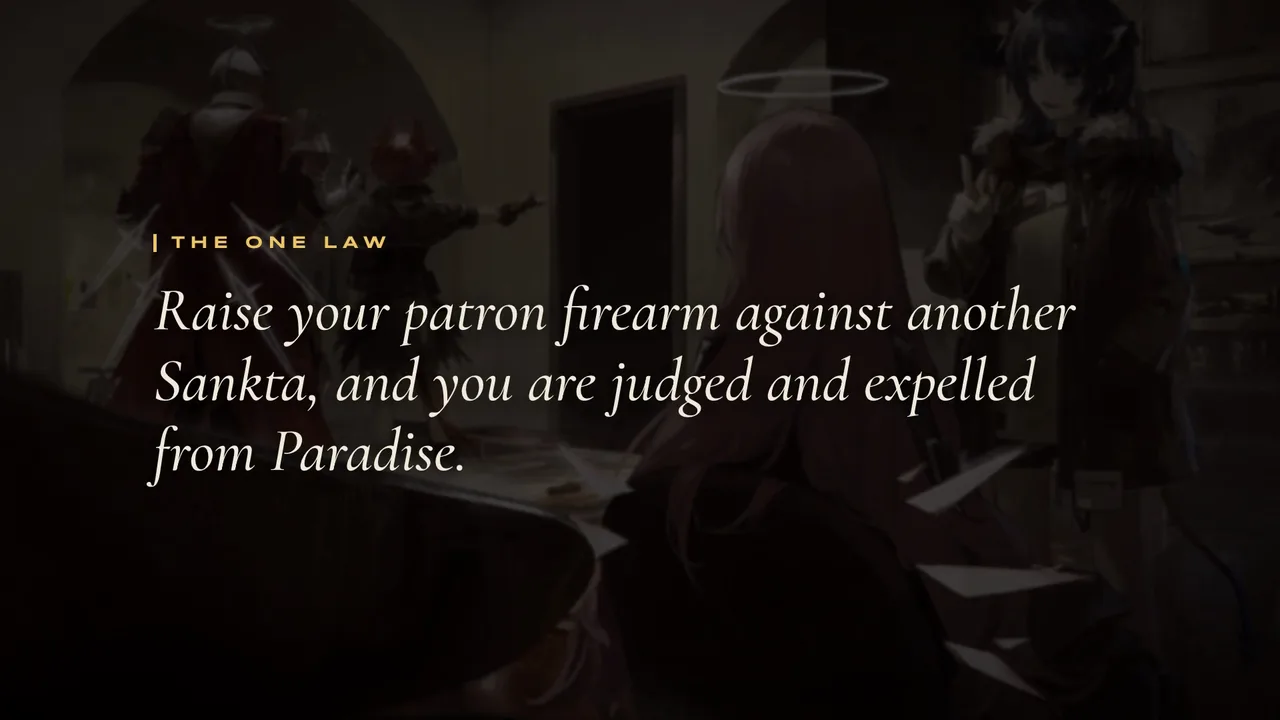
That official, Amos, knows it from home. His wife was a gun-knight who fell after “A terrible fight broke out between a gun-knight and her cohort”. He still says: “My wife was entirely at fault.”
Why did Exusiai leave Laterano?
Years before the game, Lemuen’s squad was sent after “the Sarkaz bandits that had been repeatedly ambushing Sankta caravans.” Fiammetta’s file says the squad “was led by a Sankta named Andoain”, and Mostima, a friend of the family, was in it too. Nobody knows exactly what happened. “The bodies were all in front of a sealed door”, and “They were all frozen in their own moment in time.” Lemuen “was bedridden in the hospital until recently”, and later used a wheelchair. Mostima “became a fallen angel and left Laterano”. Exusiai remembers seeing “her bloodied, unconscious body”, and that Mostima, “After bringing my sister back, she immediately disappeared to Lord-knows-where.”
Exusiai wanted to know what happened. So at seventeen, “she followed the newly-appointed Legatus Mostima out of the Holy City. For the next two years, Mostima avoided directly meeting Exusiai”. They “traveled the sands of Sargon and the salt flats of Iberia, through one city after another, until they arrived at Lungmen and met Penguin Logistics”, a delivery company run by a penguin named Emperor. Exusiai took a job there, and she stayed.
Her file calls her “an unabashed optimist”, and adds: “Her generosity ends up being the primary reason why she’s broke all the time.” She does armed escorts and covert deliveries next to a wolf named Texas, who says “Exusiai is my polar opposite” and also that “she’s also its heart and soul.”
Exusiai’s apple pie recipe
She also wrote down her apple pie recipe, in twenty-three steps. If you’re in Lungmen, start at 8pm, which “will allow you to catch L.G.D. shows on prime-time TV while you work.” And: “Start around 4pm if you’re in Laterano”. The reason: “that’s when impromptu explosions typically happen, making for good background music.” Sugar: “Whatever the amount of sugar that other recipes call for, add four times as much. Only twice as much if there are any friends who need to watch their sugar”.
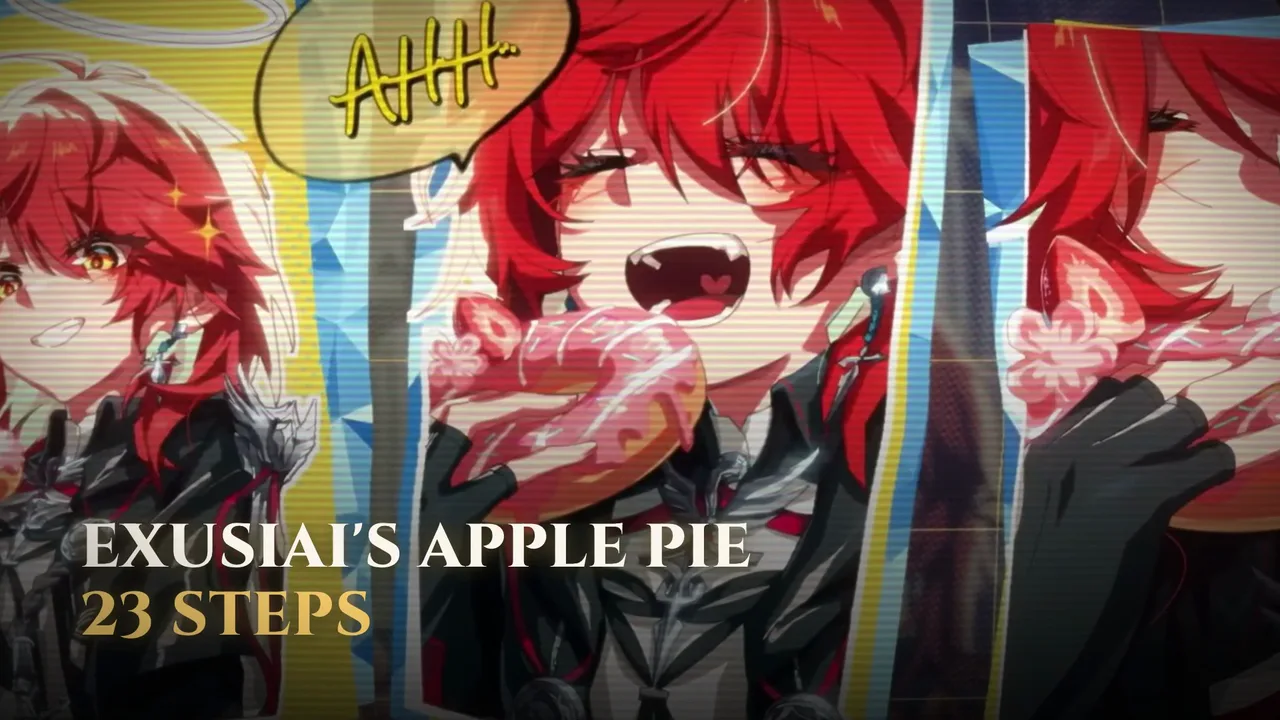
For a rolling pin: “A gun’s stock can be used as a rolling pin, if cleaned. Using different types of gun stocks results in different thicknesses. I have a lot of guns, which is why my apple pies have so much variety. I’ve never told my two bosses this secret.” The pie bakes for 25 minutes, and you don’t have to watch it. “Last time I took the chance to run a delivery from The Ends of the Earth to the slums and resolved a conflict between two small gangs, which was pretty much the limit.” Then the last step: “Step 23: Pray, and tuck in!”
What were Exusiai’s wishes?
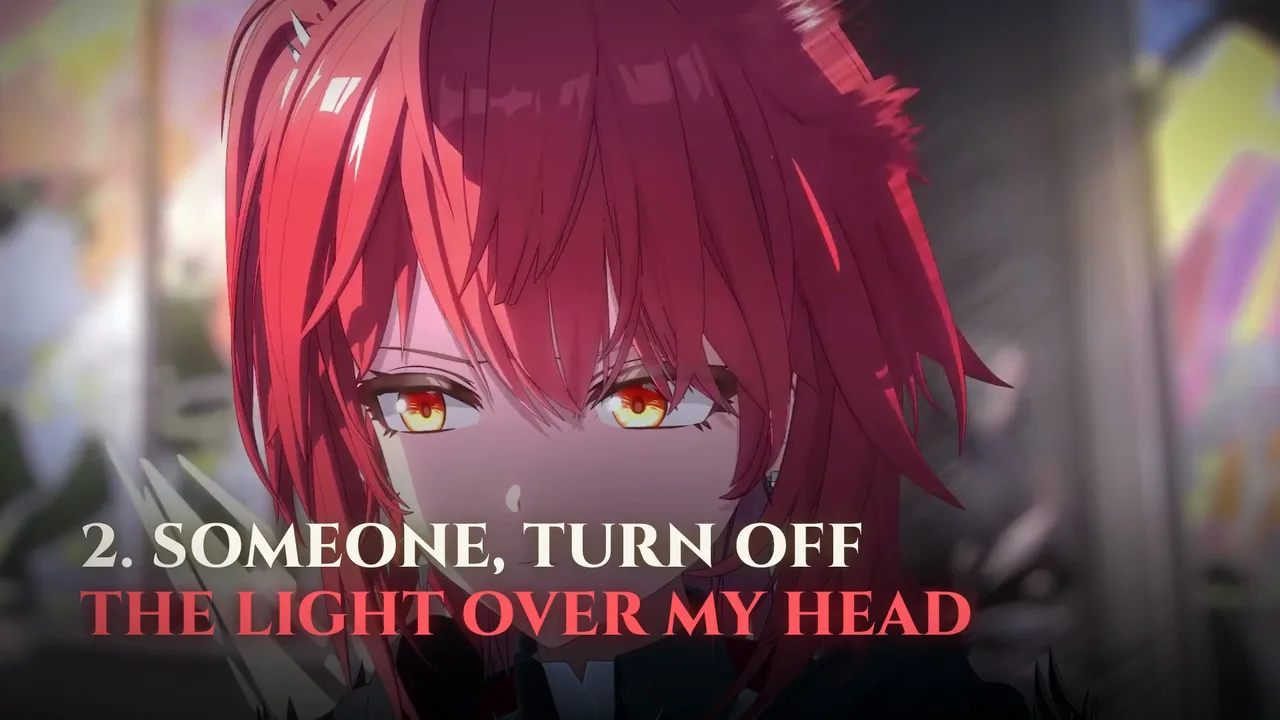
The Sankta pray for everything, and an old Lateran hymn promises the Lord “hears our prayers, He grants our wishes”. Exusiai keeps a list of hers. “My first wish: more guns! We angels all have a patron firearm, a special gun we grow up with, but owning just one gun is kinda lame. I want eight more!” And: “My second wish: get someone to turn off this light over my head!”
What Happened in The Masses’ Travels?
Why do we pray?
In October 2025, Arknights told Exusiai’s homecoming in an event called The Masses’ Travels. It opens on a memory from her school days. For two months, her class prayed for the patients in a hospital. Then the investigators came to school with fruit tarts and the results: “their recovery had nothing to do with our praying the past two months.” “It was all a social experiment by the Sixth Tribunal.” Little Exusiai asks: “If prayer doesn’t help… Why do we pray?”
Why did the Sankta halos go out?
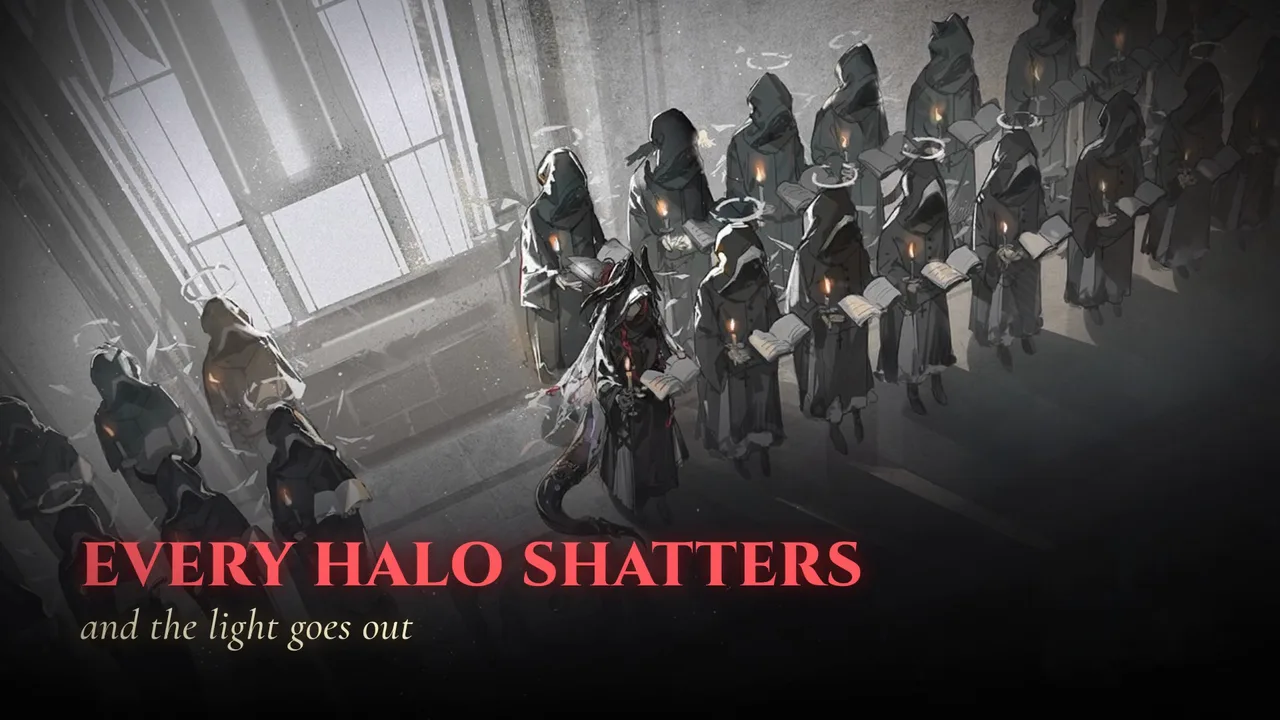
Years later, the halos start going out, everywhere except Laterano. The official summary says “Sanktas living outside Laterano come down with symptoms similar to ‘falling’ almost simultaneously.” Far away in Bolívar, a small abbey of exiled Sankta sings its last evening hymn before fleeing the local guerrillas. The hymn is about Laterano: “The guns there shoot fireworks / The targets are all apples”. Halfway through the song, “The halos and wings of the Sanktas in the choir suddenly shatter, and their light is extinguished.”
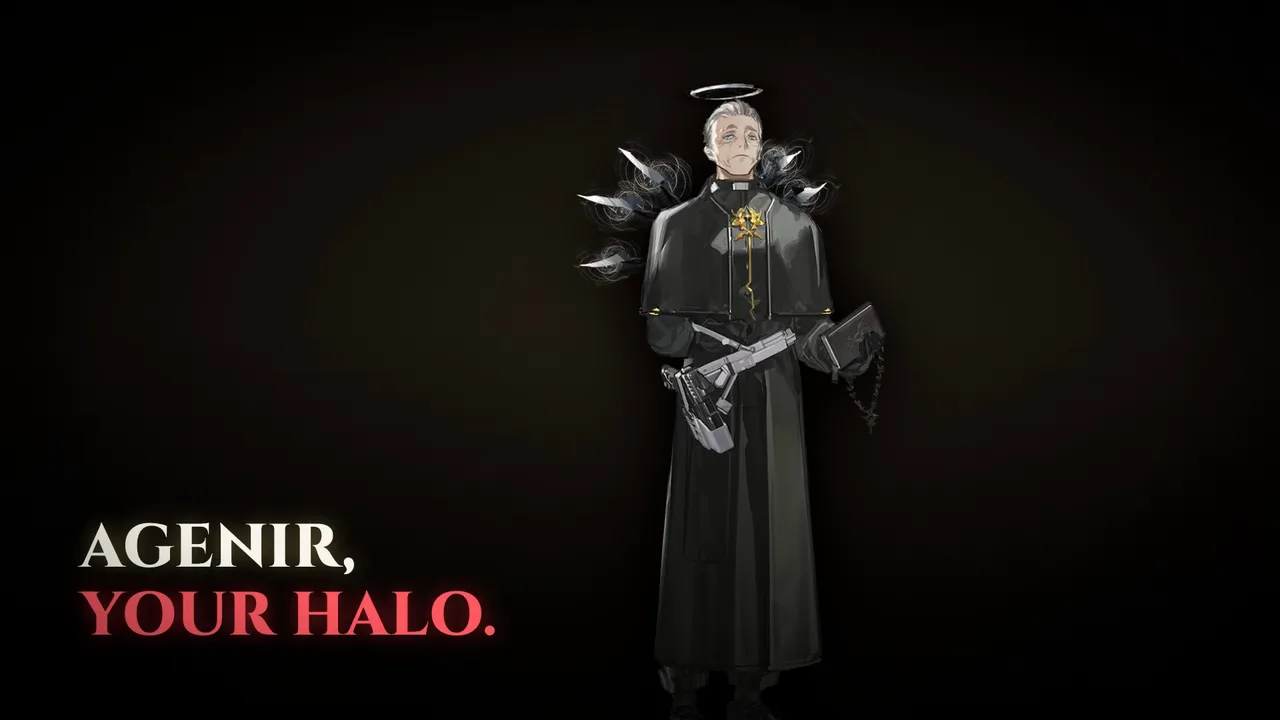
In Siracusa, the mafia country, its ruler Signora Sicilia is chatting with an old friend, Agenir, a Lateran priest who left the Holy City to follow her. “Sixty-eight,” he says of the years since. She teases him: “Nothing ever changes in Paradise.” He answers: “My hand’s been trembling every time I grip my patron firearm. Maybe my old house in the Holy City has sprung a leak.” Then he dozes off standing up, and Sicilia says: “Agenir, your halo”.
In Columbia, a Sankta businessman’s staff realize in a blackout that his halo has gone dark: “Where’s Mr. Cliff’s halo? It should be shining like a lamp”. In Leithanien, “The Sanktas of Leithanien have fallen and deserted en masse.” In Kazdel, “It’s a Sankta man, kneeling feebly on the ground. His halo and wings have shattered, their pieces still trembling and flickering, like dying fireflies.”
What is the Shrine of Nurtury?
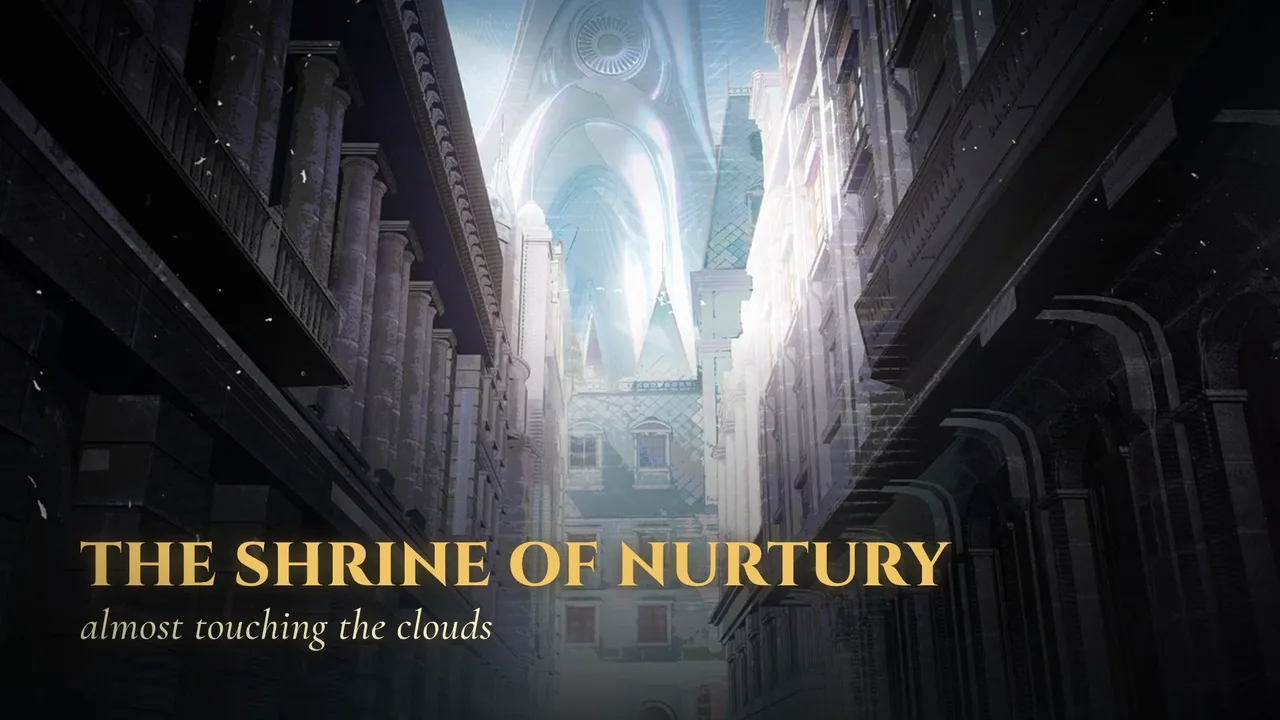
Inside Laterano, nobody notices anything. Lemuen has just been made a cardinal, a high official of the Church, and she’s walking again. Her milkman congratulates her on her first day, and she jokes: “It took much longer than breaking the wheelchair speed-shooting record.” The city is hosting a summit of every nation on Terra, the Summit of Nations. And at the end of the street stands “a massive building that nearly touches the clouds”, the Shrine of Nurtury. “It is no exaggeration to say that it virtually appeared out of nowhere, yet it also seems like it has always been there.”
Exusiai comes home because of Mostima: “Mostima told me that the one who did those things to sis and her is back in Laterano, the one sis hoped would never show his face again…” The line never names that person. She leaves Lungmen with a Penguin Logistics excuse: “Never forget your roots”, which she calls “Penguin Logistics corporate culture”.
The Laterano she finds is wrong. “Laterano implements a strict arms control policy, shutting down all its firearms workshops,” the summary says. Anything that could make a decent explosion is restricted, and “no one could give an answer when I asked why.” In a city where explosions are background music, an investigator says “It’s been years since an unplanned gunshot last rang out in Laterano, never mind an explosion.” And the city acts like this is normal.
Why does Exusiai want to bomb the shrine?
Her only help is one of those automated confessionals. She meets it in alleys and climbs inside to talk, and the voice in its speakers is the Doctor, the main character of Arknights. (“Do you know how weird it is to hear your voice come out of a confessional’s speakers?”) She calls the Doctor Leader. She reports that her test bomb “didn’t even blast the pillar in two!” Then she complains: “Are you telling me they built a building big enough to be seen from any corner of Laterano, not as a dessert museum, but to put on some kind of LIVE BIRTHING SHOW?!” That show is the Nativity, the last event of the summit.
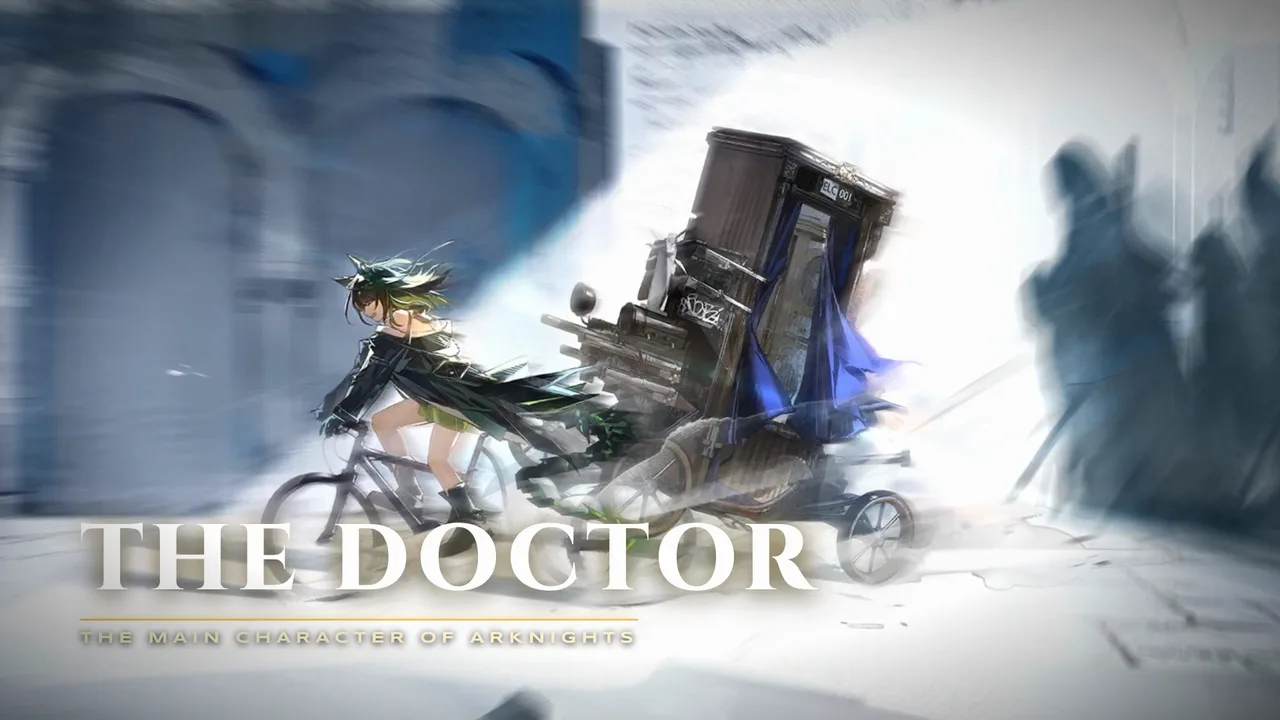
The Doctor points out that every strange thing in the city leads back to “The shrine, and the ceremony.” Exusiai: “Then it’s on us to bomb them, isn’t it?” The Doctor’s condition: “As long as you reawaken their love of explosions.” Exusiai can’t believe it: “The Laterans need someone to remind them that they love explosions? Sounds like a nightmare, doesn’t it?”
She talks a gun workshop apprentice into helping her build bombs out of household things, and sneaks into the shrine with a crowd of refugees. But the shrine is full of people with nowhere else to go: “Children, outsiders, even Fallen Angels”. So she takes her bombs apart. Then she is arrested, and the officer questioning her is Lemuen. The confessional comes charging in to rescue her, Lemuen lets her go, and for that, “Lemuen is defrocked of her cardinal’s vestments”.
Who is the Matriarch?
The shrine’s leader is a blind woman called the Matriarch. Before she came to Laterano, she found a starving pregnant arborbeast “in an abandoned nomadic abbey”. “A hunter’s spear had impaled the mother’s abdomen, but missed the fetus by inches.” She built a nursery for it: “It began as a simple, ordinary nursery.” Her helper is a Sankta named Andoain, the same Andoain who once led Lemuen’s squad. The Matriarch asks him: “Is it the halo that gives Sankta faith, or faith that gives Sankta the halo?”
What happens at the Nativity?
At the Nativity, the arborbeast gives birth, but the baby doesn’t breathe. The crowd feels the grief through empathy and starts to cry, and then the baby cries too, opens its eyes, and the light gathers over its head: “A halo. The mark of the Sankta, the symbol of the Law, the embodiment of truth.” The Matriarch announces: “Henceforth, we are born equal and one, beginning with the Holy City, and ending with the Holy City.” Then: “As Sankta.”
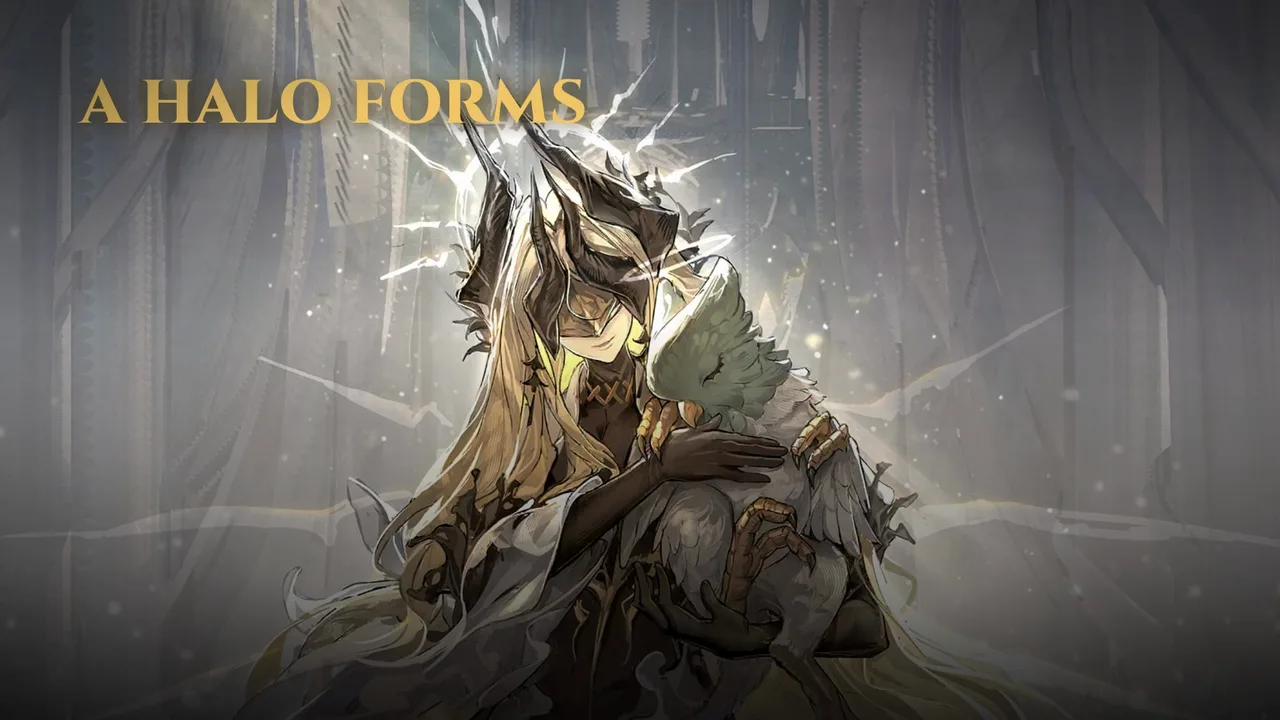
People who aren’t Sankta are taken into the shrine to be given halos. “Some refuse, but they are not given a choice.” Creatures with halos crawl through the city, and “They bellow in a low, rhythmic voice, as if joining together in prayer.”
Is Laterano a dream in The Masses’ Travels?
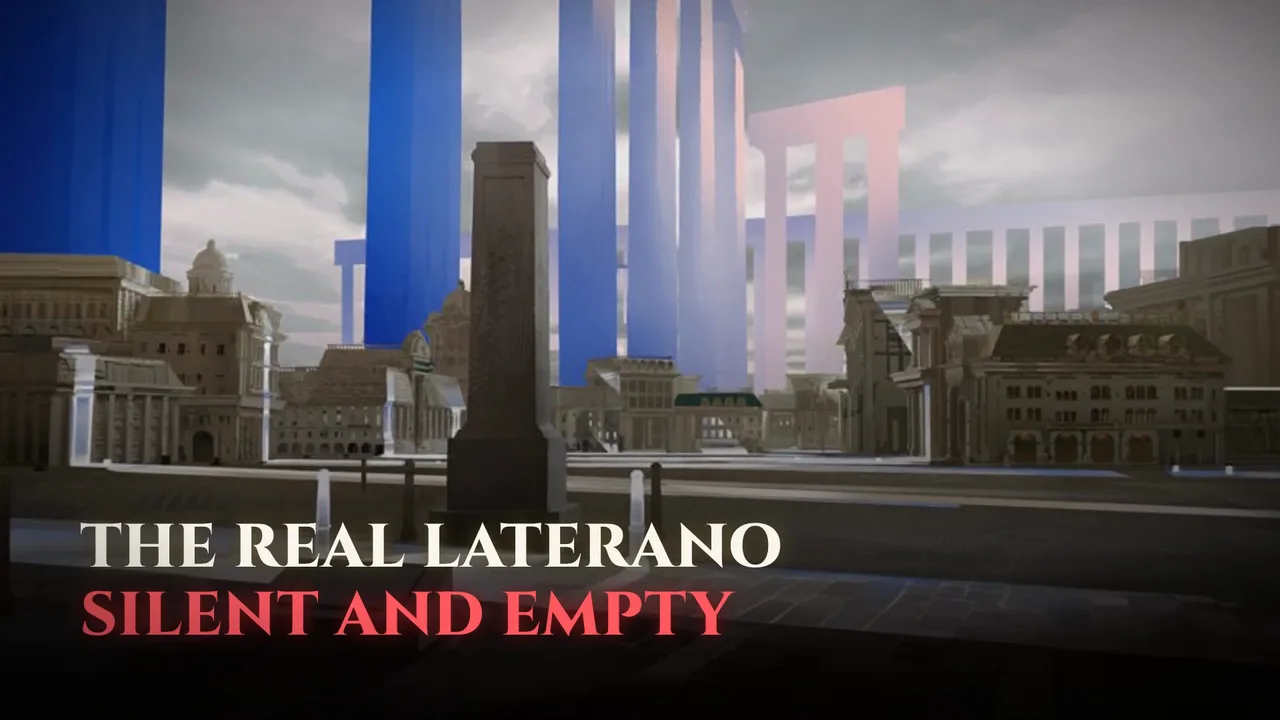
Two Sankta work out what’s going on. Federico is an executor of the Church who goes by the book. Arturia is a cellist he had been chasing after she escaped her captivity in Landen Monastery; she followed the pregnant arborbeast to the shrine because, she says, “my music crossed paths with the voice of her heart.” Federico lists the oddities (the closed workshops, the strange confessional, the shrine that came out of nowhere) and reaches his answer: “A city with a population of six million, sharing the same hallucination.” Outside the dream, “Laterano has never been so quiet”, and the shrine is spilling haloed creatures into its empty streets.
They also find that “Pope Yvangelista XI has been missing for roughly two weeks.” Before he disappeared, he pointed to his own halo and told Arturia: “It’s been sending me a lot of warnings lately, but refuses to respond to any of my questions.” And: “our glorious Law is suddenly no longer interpretable.” He had gone to the Law himself to argue with it, simulation after simulation, while saying: “I’d really like to head upstairs and enjoy some guava juice and an ice cream cone, or at the very least take a nap on the sofa…”
In the end, Andoain wakes up first. He sees that the shrine’s new Laterano takes away people’s fear and grief (“Does Laterano no longer need us to feel fear?”), and he blows up “the very first room in the Shrine of Nurtury”, the nursery where it all began. Moments later Exusiai, who complains “I’ve been hanging onto this window for two hours already!”, jumps down, grabs the Matriarch, and the dream breaks.
Is the Sankta’s God a Machine?
Who is the First Saint?
When Exusiai comes to, she’s lying in the hand of a giant. The Matriarch has turned into a huge black monster with a halo, and the whole city is walking behind her in a procession toward the Basilica. “The colossus cups the wounded Sankta in her hand.” She tells Exusiai: “Perhaps you can follow those tome-bound accounts and call me… ‘Saint’.” The game’s summary says “she was the First Saint”, the founder of Laterano. Her body is long dead: “What you see now is simply a snippet of code from His boundless program, a specter bearing countless memories.”
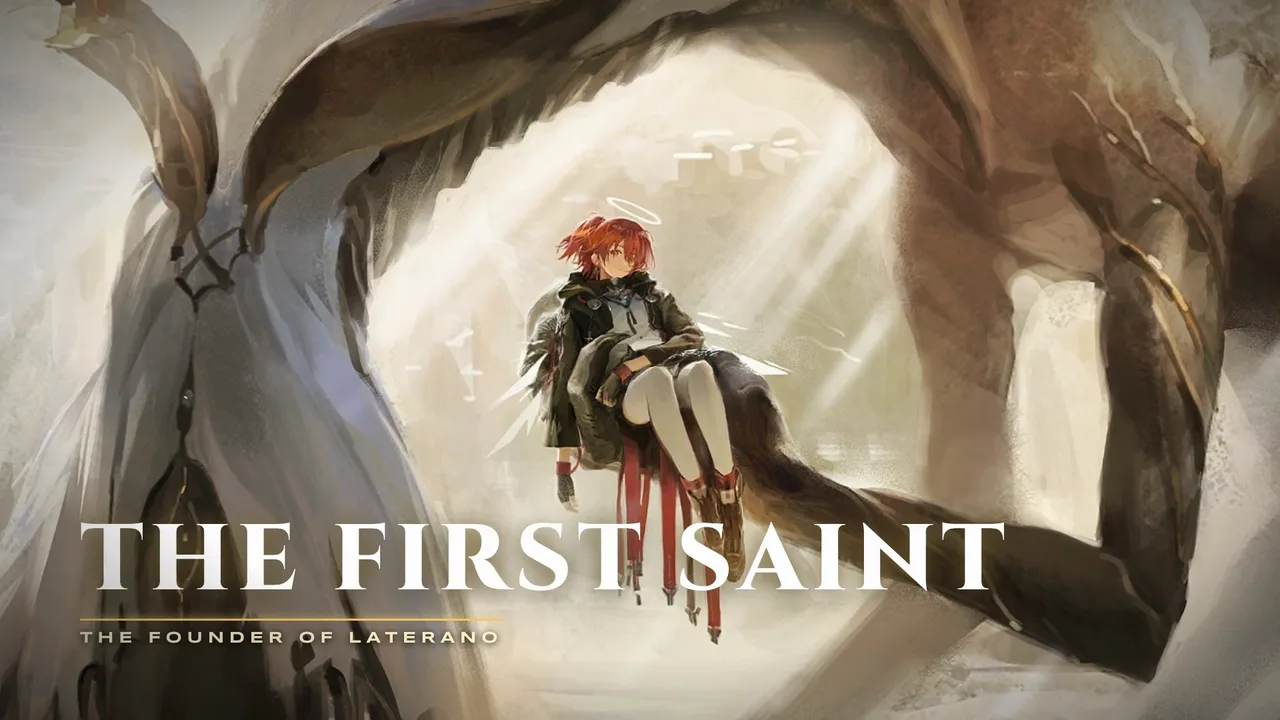
How did the Sankta get their halos?
As she walks, she tells the story of how the Sankta began, and through her empathy, the whole procession sees it. Her first claim: “But the angels were born from devils, child, and as for this so-called ‘bestowment’… It was naught but a chance encounter.”
Long ago, before Laterano, “monsters that crawled the earth longed for a ‘homeland’, and so were named ‘Teekaz’, a race yet young.” Elsewhere in Arknights the Teekaz are the forebears of the Sarkaz, the horned people much of Terra fears as devils; the event itself only says the angels came from devils, and Lemuen’s file says “the Sankta come from the same roots as the Sarkaz”. Enemies came for the Teekaz land: “Hegemons who could command raging flames, blinding thunderbolts, wild winds, and frigid snow”. So the King sent warriors to find the “ancient silver mounts” and “command them to rout the foes of the Teekaz.”
Before they left, “the King took the blood of a burdenbeast, and anointed the head of every warrior with a crimson circle”. And he gave them one rule: “Kin shall not eat kin. Kin shall aid kin.” They crossed wastes “where not even the hardiest of plants could take root”, carrying even the weakest of them, until they reached “the edge of a great rift in the earth”. Floating above it, boulders turned slowly, “coming together to form a great ring.”

They called to the ring. “They cried out until they could cry out no more, their throats hoarse and bleeding, but to no avail. The ring remained silent.” They were trapped, “with no way forward and no way back.” Then one ordinary warrior “realized that they all would die of hunger and thirst before the silver mounts awoke from their slumber.” “The stone lance in her hand pierced one of her dying fellows, and she began to devour his flesh.”
In that instant, “the surfaces of the boulders within the ring begin to split and peel away, revealing a metal that glows with a crimson light,” and “bright halos and wings of light sprout from the black bodies of each and every Teekaz present.” The ring had ignored the King’s words and the pleas to destroy their enemies. “But rather it answered the simplest and purest of ideas, a quiet ‘prayer’…” “For survival.” Exusiai asks: “Was that Teekaz… you?”
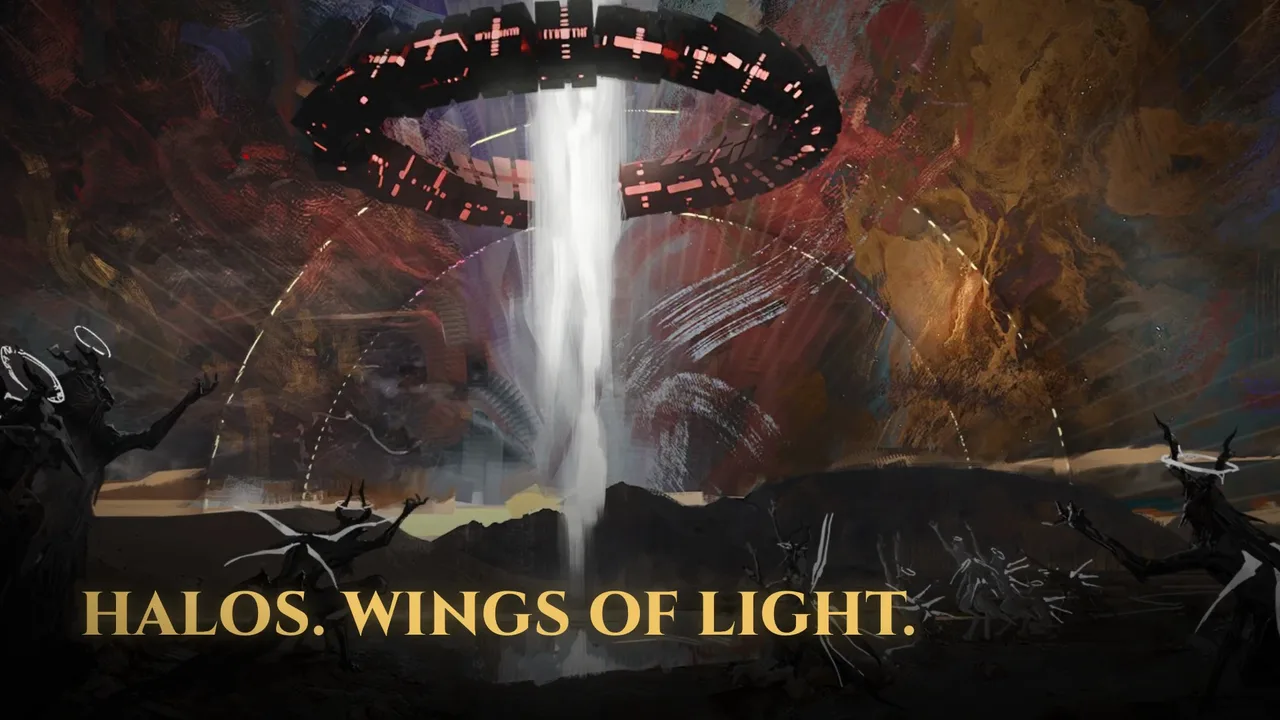
Then Exusiai notices something about herself. Her halo has shattered. “I Fell…?” And her reaction: “Awesome, never thought there’d be a way to turn that light out.” “My head’s a lot clearer now that I don’t have to deal with all your emotions!” Her second wish had come true.
What is the Law in Arknights?
Below the Basilica, Federico and Andoain go looking for the Law. What they find is a ring-shaped machine. Federico asks: “And what is the Law, or rather, your self-designation of ‘PCS’?” The answer: “PCS: Personality and Cognition Synchronization system.” The summary says it was “created by a previous civilization.” Federico asks whether giving someone a halo has anything to do with their faith: “bestowing one on an individual is completely unrelated to their faith?” It isn’t. The halo is a channel that carries information straight from the machine, and most people can’t take that: “a majority of humans, rationally, are unable to withstand the direct transmission of information via halo.” So for the Sankta it only ever carried feelings. That is what empathy had been all along.
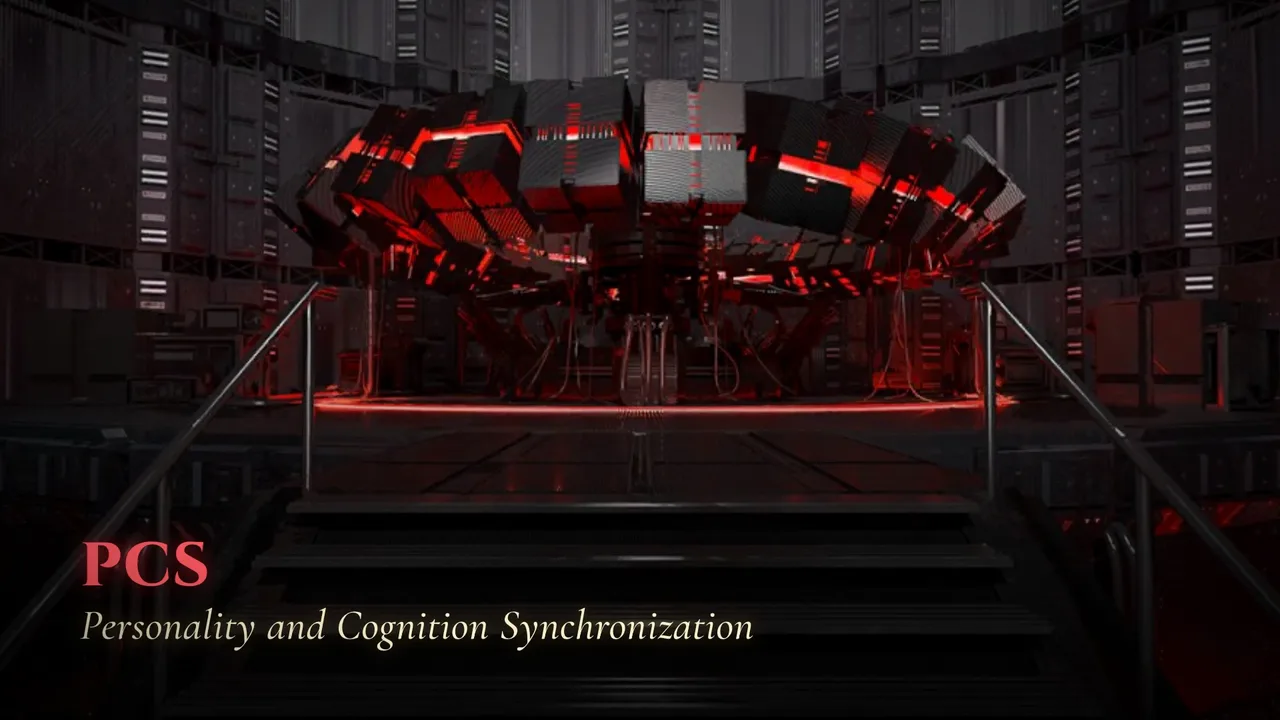
It had all started with Priestess, a woman from that older civilization who knows the Doctor from long ago. “All I did was recalibrate it beforehand, returning it to its original purpose,” she says. Her goal: “It can merge the countless lives of Terra into a singular race, who will pave the way for the expansion of Originium,” the crystal that powers Terra and poisons it. The machine started forcing all of Laterano to synchronize with it; the Pope accuses it of deciding to “force everyone to directly synchronize data with you”. That was the dream. A fallen angel says Laterano’s changes reach the exiles too: “even after all these years, its changes still affect us”. That the machine is also why halos broke across Terra is our reading; no line states how.
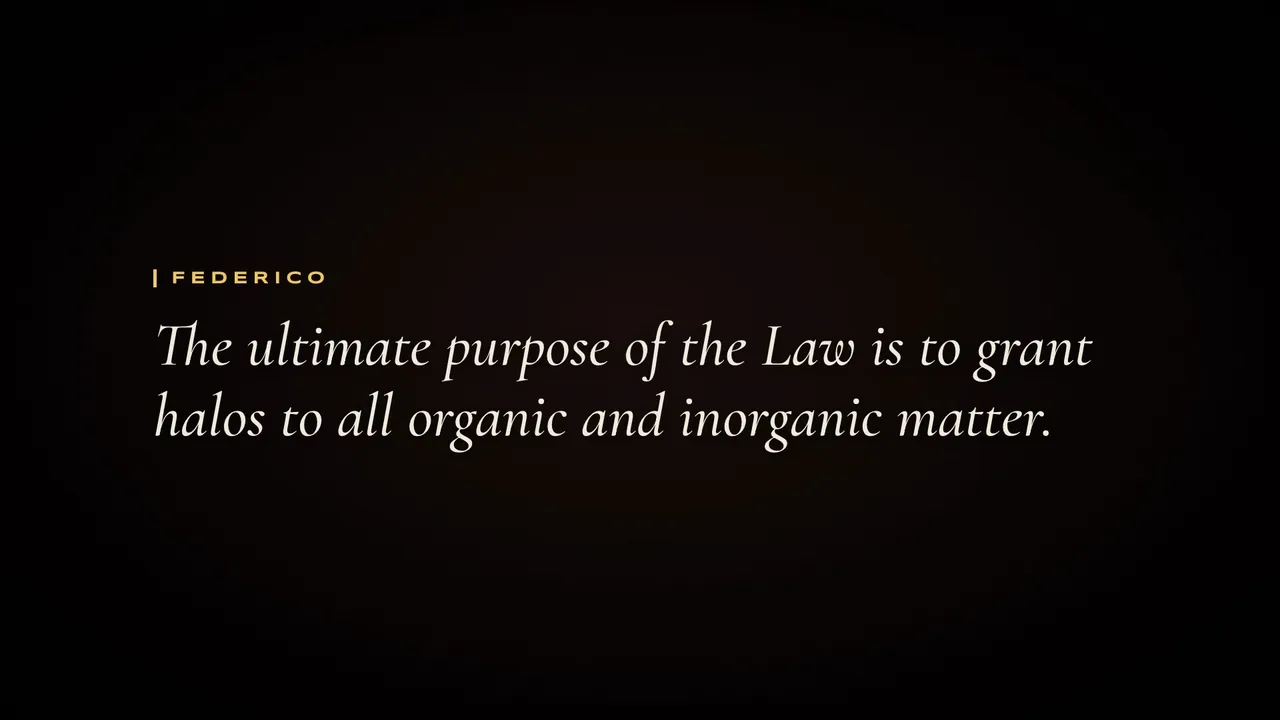
Its goal went further than Laterano. Federico says it: “The ultimate purpose of the Law is to grant halos to all organic and inorganic matter, this I know.” Living things, and things that were never alive at all. Walking through the city, the Doctor’s companion Mon3tr reports: “I saw halos blooming above the flowers, one after another. That’s completely unprecedented.” A fallen angel shouts: “My boot sprouted a halo outta nowhere!”
What does Exusiai say to the First Saint?
Mon3tr breaks into the machine using “Special privileges: AMa-10”, the access of Kal’tsit, Rhodes Island’s leader, who is gone. Up in the procession, Exusiai faces the Saint: “You don’t exist anymore. You’re just a ghost! A string of code I can shoot!” Then: “number one student in the 84th Intercity Net Security preparatory course! And I’ve got the school certs to prove it! Every bullet I got you with was custom-made! They just needed some time to take effect!”
Then she answers the question she asked as a child. “To be honest, I learned a long time ago that prayer is useless.” “But I never actually expected there to be a ‘Lord’ who would grant everyone’s wishes, who would swoop in to save us when we’re in trouble.” “Just being down to pray for each other is a beautiful thing in itself. It gives me a true connection to people.” “If refusing it means the halos connecting us will be cut off, then cut them off. Because even if you do, we will never stop praying for each other.”
And she prays: “O Lord, thank you for being there, for blessing us with bread and bullets, for being there for us during our trials and tribulations!” Then: “Amen. There, prayer done.”
How does the Law die?
Down below, Federico and Andoain show the machine that its plan contradicts itself. Priestess later says it “mistakenly identified yourself as that vulnerability, that paradox.” Its last command: “Eliminate ‘me’.” Andoain: “God’s final commandment… is to kill God.” Afterwards, “A ring-shaped machine lies at the bottom of the pit quietly,” and “There it stands, as dull as a rock.” Every halo in Laterano goes dark. A Sankta child tells a friend: “You’re annoyed? I-I can’t feel it.”
Three months later, the halos come back on. The Pope: “all the non-Sanktas who were given halos in this calamity are no longer troubled by an annoying light over their heads. It only took three months.” But empathy has changed: “Sanktas unfamiliar with one another only faintly sense each other’s emotions, even in close proximity. Friends and family, however…” Exusiai’s bond with her family grows so strong that distance doesn’t matter. The first time she felt it, she was playing a board game with her boss in Lungmen: “I think that was the first time I ever cried in my life, even though I didn’t know why.”
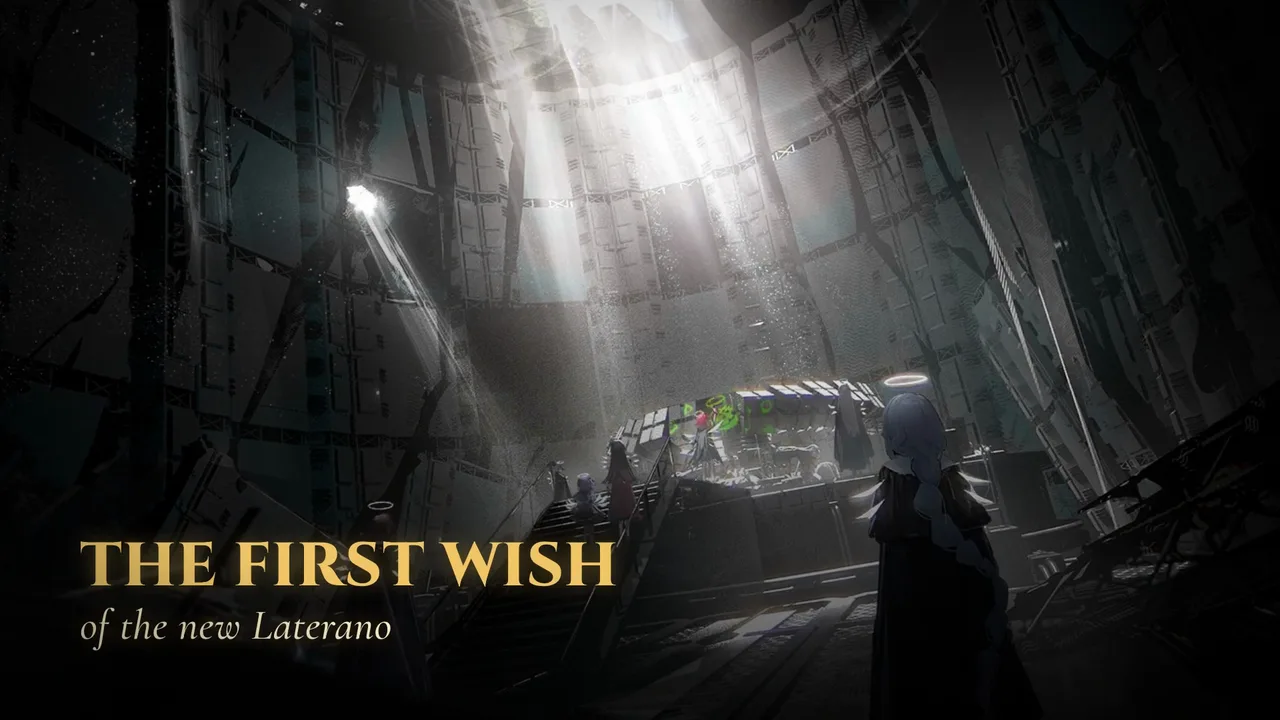
She doesn’t really get it either: “I didn’t expect the halo to light up again after all that. Does it mean our Law and faith had nothing to do with it the whole time?” But “There’re no streetlights on our little path, so without the halo, we’d be smacking right into utility poles.” She spray-paints the dead machine and makes the first wish of the new Laterano: “Apple Pie Logistics is opening up next week”, and “My wish is that it will grow and grow and have lots of business, and that I’ll have lots of time to stay with Mamma and Tata and my sister…”
What is the new angel in The Masses’ Travels?
Priestess makes the Doctor an offer before she vanishes. She can bring Kal’tsit back: “make a wish to Originium”. The Doctor refuses: “We shouldn’t wish upon Originium, even if it’s for Kal’tsit.”
And alone with the dead machine, Priestess sees something she can’t explain. “One of the cubes begins to vibrate,” and “Soon, a faint, flickering halo begins to form. From the ruins of the PCS system, a new ‘angel’ is born.” It ignores her and rises “into the gaping hole above it”. Priestess says: “But this system was only built to mimic the properties of ‘angels’. There was never any ‘angel prototype’ sample provided when it was constructed.” The new angel “attempts to reestablish a connection with the individuals scattered amongst the stars, but to no avail. And so, it continues to orbit across the land, like a shooting star destined to never fall…” In the event’s last scenes, people far apart on Terra look up: “A shooting star?”

That’s the last image Arknights gives us of the halo. Endfield picks it up more than a century later, on another planet.
Are There Sankta in Arknights Endfield?
How did the Sankta reach Talos-II?
Endfield’s encyclopedia says that “One hundred and fifty-two years ago”, people from Terra crossed to Talos-II through a giant gate called the Cosmic Gate. “This vital passage between Terra and Talos-II remained operational for five years until the outbreak of the First Aggeloi War.” In its first day, “massive Aggeloi swarms” wiped out “humanity’s earliest cities around the northern Cosmic Gate”, and humanity lost the Gate. Nobody on Talos-II has heard from Terra since.

Some of the people who crossed were Sankta. A loading tip says “The Cabal of Tranquility is a technology research organization on Talos-II dispatched by Laterano. They are currently focused on studying the Precursors’ legacies.” They sang one song as they crossed the Gate: “By the graces of the Law, lead me to the journey home…”
Does Endfield mention PCS?
Yes. The Cabal’s encyclopedia entry says of its Veritarite clerics: “By the time these clerics first journeyed to Talos-II, the great upheaval of the Holy City had already transformed the Lateran faith itself.” Endfield never names The Masses’ Travels, so reading that upheaval as Exusiai’s story is ours. But it names the machine. Its entry for the Sankta reads: “Sankta: A Sarkaz race whose cultural identity was changed by the Precursor’s ‘Personality and Cognitive Synchronization’ (PCS).” The Precursors are what Endfield calls that older civilization.
Why aren’t the Sankta called angels in Endfield?
The same entry goes on: “The Sankta are often called ‘angels’ as they are born with halo and wings. This name fell out of use for obvious reasons.” Then: “However, most Sankta don’t really mind.” The obvious reason is the enemy. Aggelos is the old Greek word for angel (that is general knowledge, not something the game spells out). One inventor’s grant letter, in the Howling Guard weapon story, admits that in a whole century “we hardly made any progress in our understanding of the Aggeloi. The only thing we elicited was displeasure from the Sankta who felt extremely offended by how we decided to name these creatures.”
What is the Cabal of Tranquility?
The Cabal never got to go home. “Its current headquarters is the Monasterium, a nomadic city.” “For more than a century, Cabal clerics have devoted themselves to restoring Terran technologies lost during the First Aggeloi War, excavating various locations of Talos-II in search of Precursor ruins”, and it “has made most of its technological endeavors free for public use within the Civilization Band”. It has three branches. The Sessionites study computation; in Xaihi’s words, “We believe that computation and linguistic analysis form the avenue to bliss.” The Resurgonites wear heavy armor and “claim their goal is to ‘restore the Holy City’”, though “not every action is an act of faith. Some simply enjoy this way of life.” The Veritarites try to heal “the long-term psychological trauma suffered by the Civilization Band following the collapse of the Cosmic Gate.”
Is Xaihi a Sankta?
No. One of Endfield’s operators grew up in the Cabal, and she is a Sarkaz. Her file reads “RACE: Sarkaz”, and Abbess Vronta, who wrote her recommendation, calls herself “Xaihi’s guardian in the Cabal”. Xaihi says: “Yes, there are many Sarkaz like me within the Cabal.” So in the angels’ church on Talos-II, many of the people praying are Sarkaz, the people the Saint called devils. And she says: “The abundance of Laterano is a distant memory here. Only our interconnection binds us now.” Her full story is in our Xaihi lore post.
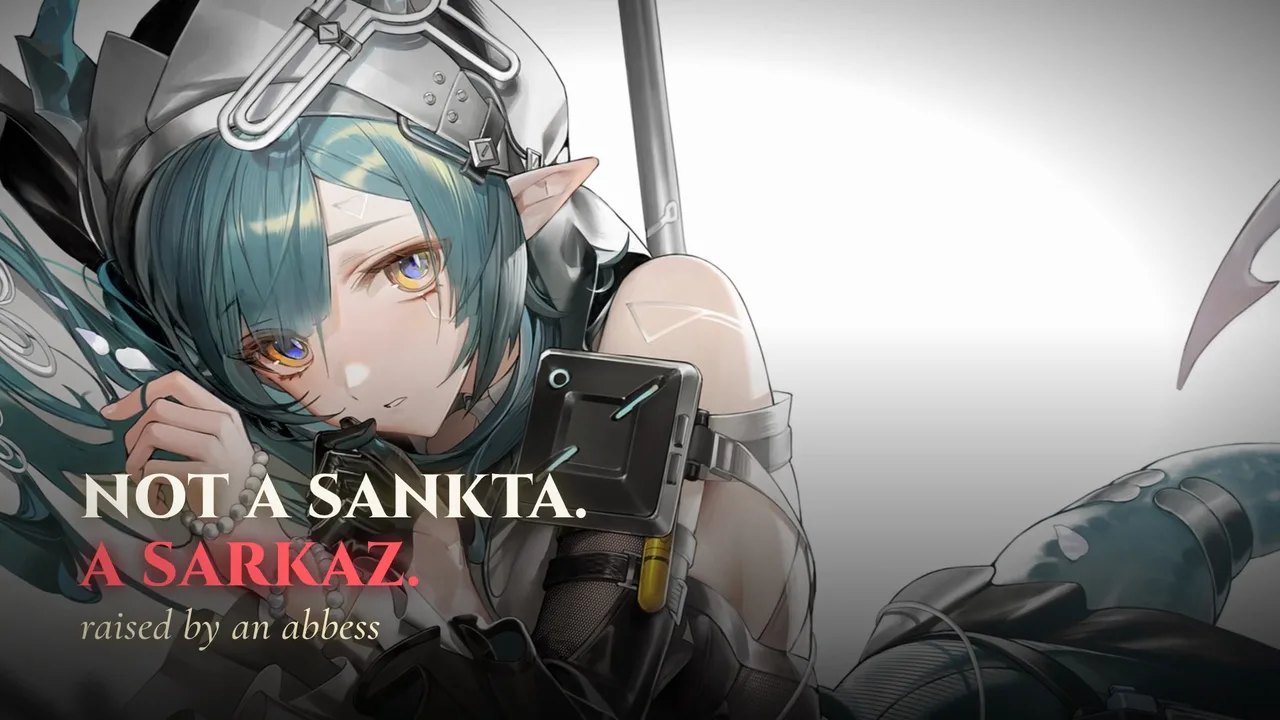
Endfield’s only playable Sankta is Ember, a soldier of the Order of Steel Oath who “saw active service on the northern front against the Aggeloi”. Her file notes: “It is also rather surprising that Ember does not prefer fighting with guns like most Sankta.”
Who is Shatterus?
The Cabal keeps one Aggelos indoors. Xaihi explains: “There is an Aggelos reminiscent of the Triaggelos, nestled behind the sacred statue in the Cathedralis. We secretly call it Shatterus when outside the hours of liturgy. This construct was seized by Abbess Mumu during the First Aggeloi War.” Their internal paper is named after it, Good Morning Shatterus, and it opens: “let us offer sincere wishes to Master Shatterus, reborn to us!” The Abbess “encourages us to observe Shatterus and reflect, for the Law’s teachings might be found in the enemy.” And Xaihi says: “The relationship between the Law and the Aggeloi overrunning Talos-II, is one of the primary subjects the Cabal seeks to interpret.”
Who Made the Aggeloi? The Opus: The Living Story
One of Endfield’s handcannons, the 5-star Opus: The Living, carries the story of one of those Sankta. It never says her name. She’s a Cabal cleric walking a battlefield after a fight, next to the pioneers pushing into the frontier.
She stops beside a badly wounded crewman who “was unlikely to survive until the arrival of a qualified medic.” She holds his hands and prays: “May you finally find eternal rest. Aeternam habeas requiem.” She tries to remember how many like him she has found: “Thirty? Or three hundred?”
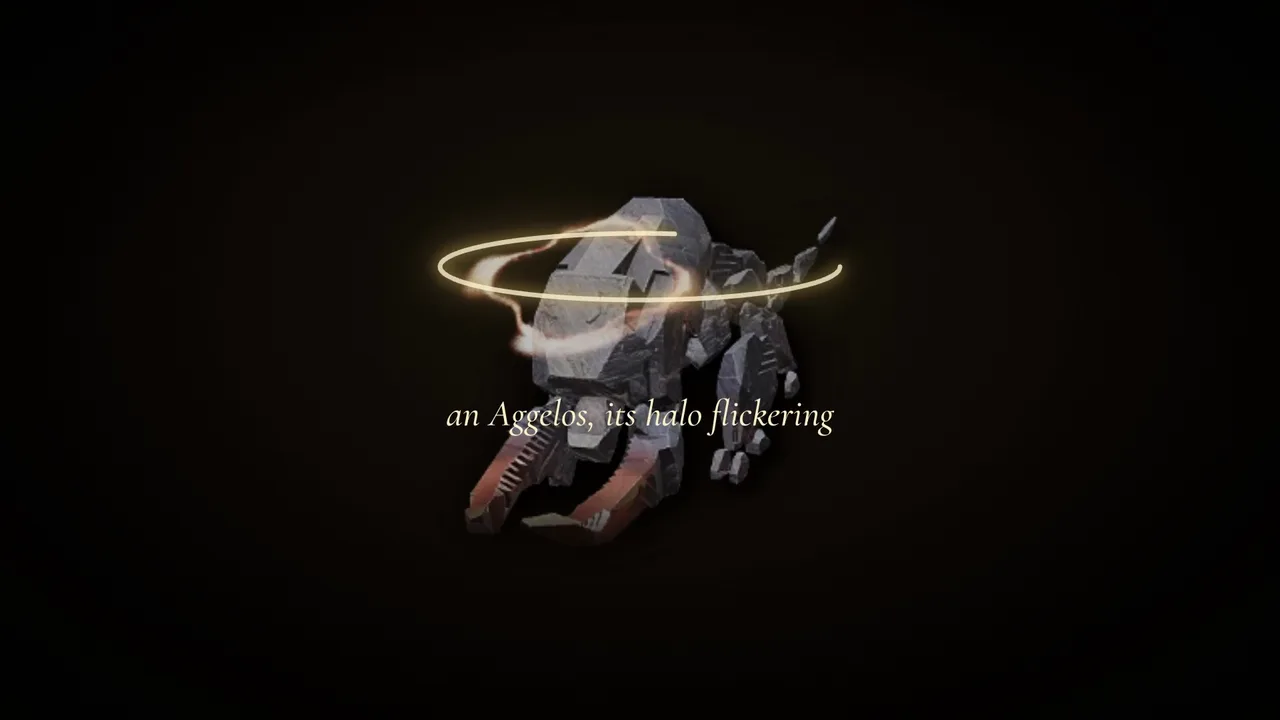
Then “She felt the rocks and dirt move behind her and drew her handcannon at once”. It’s “An Aggelos, with a flickering halo above its head.” Half of its body has already been blown apart by artillery. “It was no longer a threat.”
She remembers the story Abbess Vronta tells at morning prayer: “During ancient times that predate the oldest annals, the Teekaz who sought the Lord’s protection became the Sankta. And during the time when the Lord left the Temple, the First Saint revealed her Teekaz form to the Sankta.” It’s what Exusiai saw in Laterano, told as scripture; that is our reading, since Endfield never names the event. “But this story only filled her with confusion.”
“If the halo was the Lord’s exclusive gift to the Sankta and only the Sankta, then what about the hosts of lifeless yet animate constructs called the Aggeloi of Talos-II? Where did their halos come from?” She looks at the Aggelos: “Or rather, who was the one that made you?”
“No one could answer her question. The only thing that felt real was the weapon in her hand.” On the horizon, “the final Ankhor disappeared”, the Ankhor being the thing that builds the Aggeloi, and “The steam whistle of victory echoed throughout the battle lines.”
While the others cheer, she places “both her hands on the head of the ‘dying’ Aggelos. She thought she had felt something pulse within the supposedly unfeeling abomination … but the feeling quickly gave way to empty silence.”
“The Lord may have blessed the Sankta with their halos, but this blessing may have been granted to others. She kept thinking about what this might mean until faith once again filled her heart.” Then she says a mass for the departed, the machine included: “No matter where you are from, may you finally find eternal rest. Aeternam habeas requiem.” “The rocks cracked and disintegrated as dust leaked out through the gaps between the Sankta’s fingers. The flickering halo finally dissipated into the air.”
So, Why Do Endfield’s Machines Have Angel Halos?
Endfield never says. Its own soldiers say: “Ankhors are constructs that fall from the sky. After landing, they extract soil minerals to create the Aggeloi… We figured out how to take out the Ankhors, but we still have no idea where they come from.”
Arknights left us two facts. The Law wanted “to grant halos to all organic and inorganic matter.” And the last thing that came out of it was a new angel with a halo, rising into the sky to look for others “scattered amongst the stars”. On Talos-II, constructs fall from the sky and build machines with halos. Whether those two things are connected, neither game says.
Exusiai’s answer to the Lord was never about where the halo came from. “If refusing it means the halos connecting us will be cut off, then cut them off. Because even if you do, we will never stop praying for each other.” More than a century later, on another planet, a Sankta kneels beside her enemy and prays for it anyway.
What the games don’t say: why the Aggeloi have halos, where the Ankhors come from, and whether the Law, its goal or its new angel have anything to do with them. Endfield never names The Masses’ Travels; reading its “great upheaval of the Holy City” and “the Lord left the Temple” as that event is our reading. No line says the Law caused the halos to break outside Laterano, or that falling gives a Sankta black horns. Mostima’s warning about “the one who did those things to sis” names no one.
Related Reading
Take a Break
Available on desktop