LIINO STORY: MORNING STAR OF LA FANTOMA
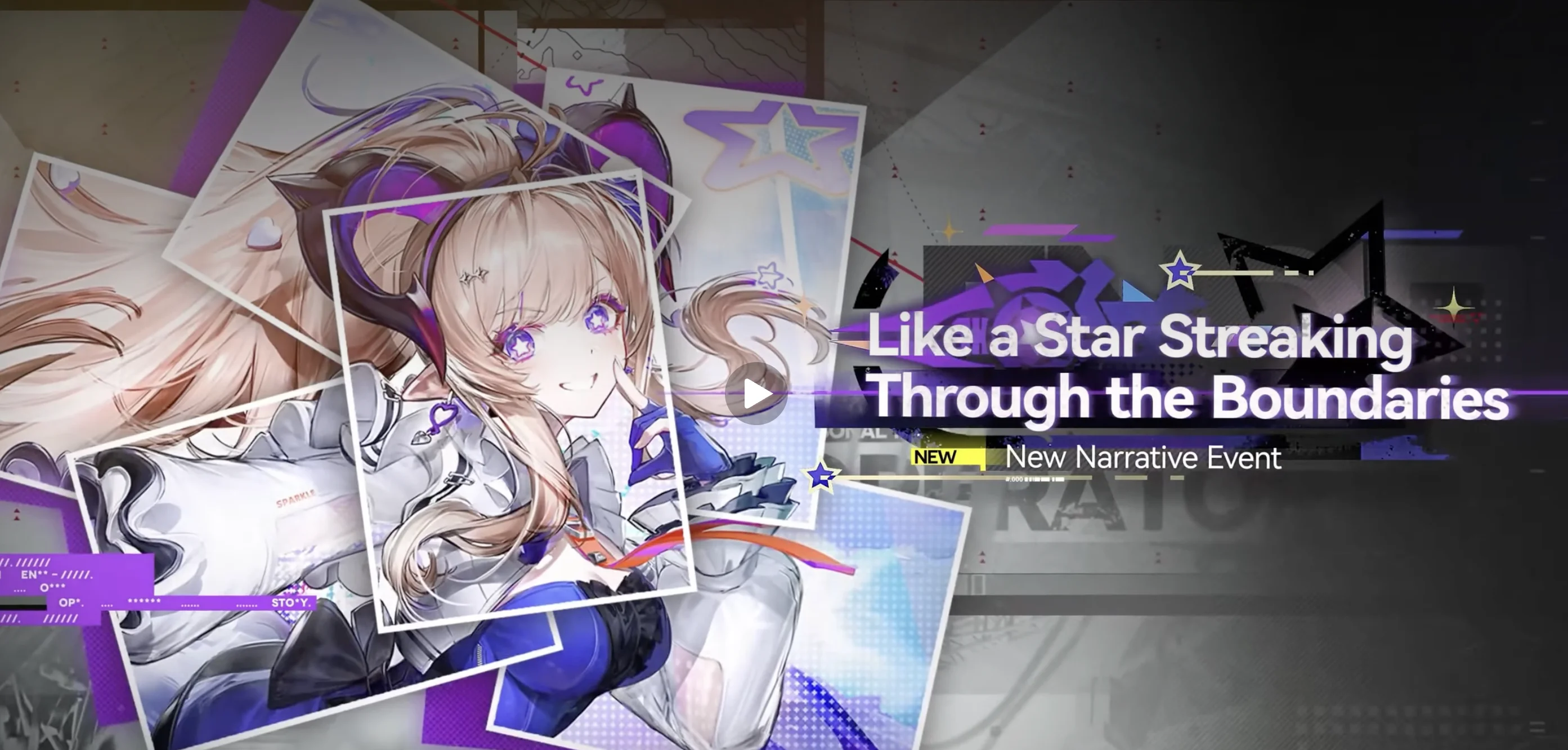
Table of Contents
Liino was never kidnapped. The missing-idol case that opens Like a Star Streaking Through the Boundaries is a crime scene she built herself, and the quest tells you so barely twenty minutes in. What it spends the remaining three chapters on is the much harder question: what she was running from, and how much of what she says afterwards is still a performance.
Keep Endfield Hub free
Every calculator, planner and guide here is free, and it stays that way. If something here helped you, $3 a month on Ko-fi or Patreon pays for the hours behind the next patch.
Most players filed this one under “cute idol side story with a flying stage boss fight.” That is a reasonable read of the surface. It is also the version where you miss that the concert was a corporate recruitment front, that Liino targeted the Endministrator on purpose and admits it to his face, and that the quest’s actual ending is a spreadsheet.
So here is the full breakdown: the Brady Mining scheme underneath the charity concert, the confession scene in Chapter 3, what the Endministrator quietly does off-screen to free her, and why the quarterly balance sheet is the most important document in the whole event.
Endfield Hub is a fan-made resource and is not affiliated with Hypergryph or Yostar.
TL;DR - Key Points
- There is no kidnapper. Liino faked her own disappearance to force the charity concert to be cancelled. The Originium Arts trace you follow is hers.
- The concert was a talent-poaching operation. Pan-Talosian Entertainment is a Brady Mining Group subsidiary, and the shows were cover for moving UWST workers onto transfer agreements with buried clauses.
- She researched you before she ever met you. Liino dug up everything she could about the Endministrator, including through a friend of Ses’qa, so she could pull exactly this favour.
- Her opening move is a lie to an amnesiac. She claims you two are old friends, then folds the second you say you genuinely do not remember.
- The Endministrator wins the fight with paperwork. Fiona sends Brady Mining an anonymous evidence packet, and the agency backs off overnight.
- The balance sheet is the ending. Liino donated 4,200,000 anonymously to Valley IV, closed the quarter at minus 342,334, and told you she was worried about her tour.
- She joins Endfield as a bit. The joke is that Endfield needs an idol brand. The real reason is she has 255 left to her name.
Who Liino Is Before the Quest Starts
By the time the Endministrator walks into Valley IV, Liino is already the biggest idol on Talos-II and everyone except him knows it. Alia has to explain her from scratch, and does it with the specific joy of a fan who has been waiting for permission.
The details Alia and the crowd supply are worth holding onto, because the quest uses all of them later:
- “Morning Star of La Fantoma” is her epithet, tied to her home city.
- Two signature songs, The One and Only Starlight and Fly Talosian and Go Supersonic, come up repeatedly.
- She was popular before she debuted, active online long before the agency signed her.
- Merch and album sales top every platform, to the point that fans set alarms to buy.
- The live shows are the real draw. One Endfielder insists her greatest work is her live performances, specifically the Obsidian Festival set.
That last point is the one the quest is built on. Liino is not a manufactured product who happens to sing. She is a performer whose value sits almost entirely in things a corporate schedule cannot mass produce, which is exactly why her agency finds her so difficult.
She is also a Djall, and she has opinions about it. One of her idle lines is a small rant about people assuming Djalls can charm money out of anyone with a smile, capped by her telling the Endministrator to look directly at her face and report whether he feels any uncontrollable urge to hand over his wallet. It plays as a gag. It is also the quest quietly telling you that her charm is a skill she practised, not a racial cheat code.
The Concert That Was Never About the Concert
Alia is the first person in the quest to notice something is wrong, and she notices it out loud before anything has actually happened.
The Talos-II General Chamber of Commerce is running a charity concert in Valley IV. Fine. But the sponsor is the Brady Mining Group, which has a documented history of ugly disputes with the UWST over Originium mining and a reputation for tactics that do not survive daylight. Liino’s agency, Pan-Talosian Entertainment, turns out to be one of that group’s subsidiaries.
Alia talks herself into the charitable reading twice and does not sound convinced either time. Her actual question is the right one: why would a company like that go out of its way to host a charity concert in Valley IV?
The answer arrives in pieces across the next three chapters. Brady Mining is running joint job transfers, moving UWST workers to Alloycarrot on agreements that sound generous. Better benefits. New equipment. Actual sleep. The concert exists to make the company look like a friend of the Valley while those agreements circulate.
Liino knows what is in them. Late in Chapter 2 she tells the Endministrator flatly that the transfer agreements contain hidden clauses, and that the problems will not surface until the workers are already at the new site and committed. She has watched this happen before. Her concerts have been the sweetener every time, and she has been expected to smile through it.
“But I never wanted any part of those scams.”
That line is the load-bearing beam of the whole event. Everything Liino does from the fake kidnapping onward is an attempt to break the machine she has been a component of.
Chapter 1: The Kidnapping That Wasn’t
The staff account of the disappearance is thin in a way that should tip you off immediately.
Eren, the agency liaison, lays it out: Liino’s vehicle broke down without warning, she said she felt lightheaded and wanted to stay behind and rest, everyone else stepped outside, and by the time repairs finished she was gone. The perimeter search found nothing. The agency is proceeding on the assumption of abduction while openly admitting it has no evidence of one.
Read that sequence again and it is not a kidnapping report. It is a description of someone arranging to be alone.
What the Endministrator finds at the scene:
| Clue | What it looks like | What it actually is |
|---|---|---|
| Scratches and scuffs across the car door | Signs of a struggle | Set dressing, or ordinary damage read through panic |
| A bottle of pale purple perfume | A dropped personal effect | Her scent marker, bold and deliberately not sweet |
| A map with almost everything crossed out | Frantic scribbling under duress | Her own planning document |
| A heavy red circle around “Valley IV” | An abductor’s destination | Her chosen venue |
| Originium Arts residue in the air | The kidnapper’s Arts signature | Hers |
Fiona confirms the scent is Originium Arts residue and tells the Endministrator the caster is very likely the same individual who took Liino. She is technically correct and completely wrong, and the quest is happy to let both stand for a while.
The map is the giveaway that survives rereading. A kidnapper does not cross out options. A performer scouting a venue does.
Liino Knew Exactly Who You Were
The reunion scene is the sharpest character writing in the event, and it goes past most players because it is dressed as comedy.
Liino, cornered, opens with a story: she escaped the scary people who kidnapped her, she got lost, and of course you will help her, like you always have. When the Endministrator does not react, she escalates. How could you be so cold? Pretending not to recognise her is too much. She was only this tall when you first met, and you used to pat her head.
Then the Endministrator tells her he has amnesia, and she stops dead.
Her recovery is instant and revealing. She calls it: amnesia, for real, this is not a prank? And then she pivots straight into forgiveness she has no standing to grant, on the grounds that in this whole world he is the only one who has never lied to her.
That is a person who has just discovered her mark cannot verify anything she says, and who chooses to keep going anyway. It is also, in hindsight, an unusually honest bluff. She really has been researching him. The “we’ve met before” framing is false in every detail and true in the only way she cares about, which is that she already knows him and he does not know her.
Play through the quest a second time and this scene reads as a con artist realising she has drawn an even better hand than she planned for.
Chapter 2: Building a Stage in the Sky
Once the truth is out, the quest turns into a production problem, and the production problem is where Liino stops being funny.
Her plan is a solo concert in Valley IV, staged so that everyone in the region can see it. That rules out a fixed venue immediately, both because Valley IV is enormous and because a booked hall is exactly where her agency would find her. The Endministrator’s suggestion, a stage in the sky, lands with her about a second before she starts redesigning her whole set around it.
She already has a custom flight rig, built for stunt work on stage. What she does not have is altitude. The takeoff is the opening act, and by her reckoning the opening act was underpowered.
This is where Andre comes in. He has a low-altitude propulsion prototype that has been gathering dust for six months and is visibly thrilled to be asked. He is also honest about the cost:
- Reaching her requested altitude means the booster puts serious strain on the user.
- The safety risks are, in his words, nothing to sneeze at.
- He offers to reduce the power.
Liino refuses on the spot. Not a chance. It would not mean anything that way, and for the most unforgettable performance a little risk is worth it.
You can read that as idol bravado. The quest does not, and neither should you. She has already told you what a compromised performance looks like, because she has been delivering them for years under a contract that approved every piece of equipment she asked for while denying her any say in what she did with it. The thing she is actually refusing is another version of that.
Grace and Isaac: Why the Detours Matter
Twice during a time-critical escape, Liino stops for a fan. Both times it costs her.
Grace is a UWST worker who recognises her mid-flight from the agency’s search teams. She is so nervous she cannot finish a sentence. Liino gives her a countdown, a photo taken by the Endministrator, an autograph, and a shared secret, then asks her to keep quiet about where she is hiding. Grace goes from unable to speak to promising to be at the concert.
Isaac is a kid who spots her and jumps to the conclusion that she is filming a reality show. Liino runs with it, uses him to count the guards, and tries to park him somewhere safe. He decides on his own to go distract four TGCC security guards so she can escape. He is a child, they are corporate security, and it works.
Neither scene advances the plot. Both are the quest’s argument.
The Endministrator makes it explicit in the confession scene: what convinced him to keep helping was watching her genuinely care about people she had never met. Grace, Isaac, and the crew members facing transfer. Liino manipulates almost everyone in this story, but she does not manipulate them, and she loses time she cannot afford in order not to.
Her line after Isaac’s stunt is the tell. She is relieved the guards did not give him a hard time, and she wants to tell him in person that he helped. Not that he was useful. That he helped.
Chapter 3: Hijacking the Broadcast
The promotion problem is a good piece of worldbuilding disguised as a fetch quest.
Liino posts a teaser to her personal site and it is immediately restricted. She has no idea how many people even saw it. Her own audience is being throttled by the people who own her, on the platform she built herself before they signed her.
So she goes analogue: a broadcast station near a merch stall, surrounded by fans and by the agency’s security detail. The stealth section is TGCC guards sweeping the area under instruction from a Mr. Winston to bring her back before a deadline at all costs.
The guard dialogue is worth listening to. One of them corrects a subordinate directly: her safety is important, but what matters more is the concert. That is the company’s actual priority order stated out loud by people with no reason to lie.
Her broadcast, when she gets it, is short and entirely her:
Liino will be holding a totally unprecedented, brand-new solo concert right here in Valley IV.
She announces the show, tells everyone to watch her official page, and closes on a promise to bring the brightest light in the world to everyone who loves her, to shine on every wandering heart. Then she runs.
Set against that, the agency’s simultaneous PR is grim. They have delayed the charity concert rather than cancel it, blamed an equipment malfunction, announced that Liino is in peak condition to keep fans anticipating, opened extra ticket channels, and started selling limited signed merchandise she has never signed.
The Confession Scene
Chapter 3’s quiet ending is the best scene in the event, and it is Liino losing an argument she started.
The Endministrator names the pattern back to her: the escape, the charm, the framing, all of it the same technique she used to get him to run away with her on day one. She does not deny it. What she says instead is that this is the first time she has ever felt like she cannot keep something hidden.
Then she gives up the whole plan:
- She was never a puppet. The helpless-idol framing was a role.
- She wanted the Endministrator specifically because he is admired and because the higher-ups are wary of him. Even his name attached to her, in name only, makes their tactics harder to run.
- She investigated him in advance, including through a friend of Ses’qa, so that if the chance ever came she could get his attention and his help.
- She had been waiting for the right opportunity to hit back at the agency for a long time.
- The goal was to run the concert she wanted, win big, and make going independent easier afterwards.
And then the part she does not have a strategy for. He is not the Endmin she imagined. The stories made him extraordinary and being around him feels like being with an ordinary person. He kept standing by her after learning she was not honest. She finds it inexplicable, and she says that it is precisely because he is such a strange one that she cannot open up.
The Endministrator’s reply is the thesis of the quest. He tells her he understands what it is to be admired and to want to live up to it, that she is helping people in her own way, and that watching her care about Grace, Isaac and the transferring workers is why he stayed. He also notes he was curious to see what she was planning.
She takes the last part badly, which is the correct reaction.
What the Endministrator Actually Did
The resolution to the corporate plot happens off-screen in two lines, and it is easy to miss entirely.
In Chapter 4, between fights, the Endministrator gives Fiona an instruction: send an anonymous letter to the Brady Mining Group, and include the investigative materials he sent her.
The reply comes back by radio. Brady Mining thanks the sender for the valuable reminder, says it will address the issues within its subsidiary Pan-Talosian Entertainment, and asks the sender to rest assured. Fiona works out what happened out loud, noting that the materials were evidence of the agency’s violations and that this is why they backed off so fast.
This reframes everything that follows. When Liino wonders whether Winston finally grew a conscience because the higher-ups did not tack on extra penalties for breaking her contract, the answer is no. She is enjoying the results of a threat she does not know was made.
It also sets the ceiling on the victory. Brady Mining did not get punished. It absorbed a problem, cleaned up a subsidiary, and moved on. Liino got out. The transfer scheme is a company practice, and nothing in the quest says the company stopped.
The Balance Sheet Is the Real Ending
The last interactable object in the event is a document, and it is the single most revealing thing about Liino in the whole game.
| Line | Amount |
|---|---|
| Sponsorship, Storm Entertainment | +3,000,000 |
| Sponsorship, Cross Technology | +2,000,000 |
| Sponsorship, Lemann Company | +1,000,000 |
| Endorsements last quarter | +200,000 |
| Total income | +6,200,000 |
| Daily expenses, food and transport | -8,635 |
| Performance rehearsals | -285,600 |
| Stage construction | -188,099 |
| Contract termination fee | -1,860,000 |
| Donations | -4,200,000 |
| Total expenses | -6,542,334 |
| Net total | -342,334 |
| Balance | 255 |
Read the Donations line against Chapter 4’s opening scene, where Alia reports that an anonymous donor has funded a substantial upgrade to Valley IV’s supplies and facilities so that workers can stay and work without feeling pressured to leave for other cities. Alia does not know who it was. She asks the Endministrator to pass on the Valley’s gratitude to Liino if he ever meets her.
He already has. It was Liino.
The arithmetic is brutal. She spent two thirds of her quarterly income undoing the transfer pressure that Brady Mining’s concert was designed to create. She paid her own contract termination fee on top. She ended the quarter in the red with 255 to her name, and she still filed the entire self-funded flying concert under Stage Construction at 188,099, less than her rehearsal costs.
Then she met the Endministrator, panicked about how they ended up in the red, and complained that her upcoming tour plans were probably going to take a hit.
The quest never has her admit it. There is no scene where she claims credit, and no dialogue option to make her. The only reason you know is that she left a spreadsheet open.
What Is Confirmed Versus What Is Interpretation
| Claim | Status |
|---|---|
| Liino staged her own disappearance | Confirmed. She says so in Chapter 1 |
| Pan-Talosian Entertainment is a Brady Mining subsidiary | Confirmed by Alia |
| The concerts served the worker transfer scheme | Confirmed. Liino states it directly in Chapter 2 |
| The transfer agreements contain hidden clauses | Stated by Liino, never shown on screen |
| Liino researched the Endministrator through a friend of Ses’qa | Confirmed in the Chapter 3 confession |
| The Endministrator’s anonymous packet ended the agency’s pursuit | Confirmed via Fiona’s radio report |
| Liino is the anonymous Valley IV donor | Strongly confirmed. The donation line matches, she never says it |
| The dropped contract penalty was a result of the Endministrator’s letter | Interpretation, but the timing is unambiguous |
| Winston is a villain rather than a bad manager | Not supported. Staff describe pressure plus lavish approval, not malice |
| Brady Mining faced consequences | Not supported. It handled the complaint and continued |
The Winston row is the one people get wrong most often, so it gets its own section below.
What This Means for You, By Player Type
If you only care about lore. This is the most grounded corporate story Endfield has told. No Feranmut, no Originium catastrophe, just a resource conglomerate using an entertainment subsidiary as a recruitment channel, and one employee with enough leverage to break it. It pairs directly with the UWST material in our Foundation and the Exiles Talos-II lore piece.
If you pulled Liino and skipped the story. Go back for the Chapter 3 confession alone. Her whole kit reads differently once you know that the perfect-idol persona is a deliberate construction she can drop and pick back up mid-sentence.
If you are here for the corporate worldbuilding. The TGCC, Brady Mining and the UWST are all doing recognisable things with recognisable incentives. The guards’ priority ordering, the manager’s year-end bonus anxiety, and the two employees complaining that Liino is replaceable while their bosses like her because she follows orders are the best texture in the event.
If you theorycraft. Cordelia, the manager and self-described sound engineer, stays behind at the agency and stays loyal. The Witching Hour endorsement she negotiated fell through. Liino has never been to Dijiang and wants to go. Those are three unfired guns.
Common Misreadings
- “She was really kidnapped and made the best of it.” No. She engineered the vehicle stop, sent everyone outside, and walked. The Arts residue you track is hers.
- “She is a manipulator with no real feelings.” The balance sheet closes this. Nobody spends 4,200,000 anonymously as part of a con on an audience that will never know.
- “Winston was the villain.” Winston pressured her constantly and blocked her creative input, which is the actual grievance. He also approved every equipment request without asking about cost and, per his own staff, treated her extremely well materially. He is a bad manager inside a bad system, not the architect of it.
- “Brady Mining got taken down.” It sent a polite thank-you note and cleaned up a subsidiary. The company is intact and so is the practice.
- “Joining Endfield was the plan all along.” It was improvised. She terminated her contract, discovered she was almost broke, and pitched Endfield an idol brand it did not know it needed.
- “The flying stage was a stunt for spectacle.” It was a logistics answer. She needed a venue her agency could not seize and that the entire region could see, and the sky was the only one available.
Watch List: What Would Change This
Four threads the event leaves deliberately loose.
- Cordelia. Liino’s manager stayed with the agency, cried on the phone about the termination, and promised to keep supporting her wherever she performs. She is the only sympathetic person left inside Pan-Talosian.
- The Witching Hour endorsement. Negotiated, nearly signed, lost to the contract break. Liino brushes it off. Named opportunities in Endfield rarely stay named for nothing.
- Dijiang. She asks to be taken there in her final scene and has already sketched a space-themed concert for it in her idle lines. That is a venue request with a location attached.
- Brady Mining’s next move. It absorbed one anonymous complaint without visible cost. The transfer scheme was described as something that had happened many times before, which means it has infrastructure, not just a plan.
The wider Djall question sits underneath all of it. Liino swears on the name of Djall and pushes back at Djall stereotypes in the same breath, and the game has not yet explained what that identity actually carries.
Final Read
Like a Star Streaking Through the Boundaries is a con story where the con works and the con artist is the most honest person in it.
Liino lies to the Endministrator about how they met, hides why she chose him, and stage-manages her own abduction. She also spends her entire quarterly income buying strangers the option to stay in their homes, and lets the Endministrator walk away believing she is worried about her tour schedule.
The quest never resolves that tension, and it is better for it. Her final promise is that she will not let his eyes leave her for a second, delivered by someone who has just proved she is at her most sincere when nobody is watching at all.
If you skipped it for the Oroberyl, the last five minutes are worth the return trip. Open the finance sheet.
FAQ
What is Liino’s story quest in Arknights Endfield?
It is the narrative event Like a Star Streaking Through the Boundaries, a four-chapter side mission set in Valley IV. It launched during Version 1.4 Homecoming and its event page closed on August 9, 2026, but the side mission itself remains playable from the Mission menu. Completing it awards Oroberyl x600 and an Elementary Cognitive Carrier.
Was Liino actually kidnapped?
No. Liino staged her own disappearance. She told her staff she felt lightheaded, waited for everyone to leave the broken-down vehicle, and walked away on her own. The Originium Arts residue the Endministrator tracks is her own. She admits the truth in Chapter 1 only after the Endministrator catches her hiding from her agency’s own search party.
Who is Liino’s agency and why did she run from it?
Pan-Talosian Entertainment, a subsidiary of the Brady Mining Group. The agency overworked her, blocked her from having any say in her own performances, and weaponised her fanbase by scalping concert tickets. The deeper problem was that her concerts were being used as recruitment fronts to move UWST workers onto transfer agreements with hidden clauses.
What is the Morning Star of La Fantoma?
It is Liino’s stage epithet, used by fans and by UWST workers throughout the quest. La Fantoma is her home city. Her two most-cited hits are The One and Only Starlight and Fly Talosian and Go Supersonic, and the community consensus in the quest is that her live shows are far better than her studio work.
Did Liino manipulate the Endministrator?
Yes, and she says so herself. She researched the Endministrator in advance, including through a friend of Ses’qa, specifically so she could get his attention and his help if the chance ever came. Her opening move is a bluff that the two of them are old friends, aimed at an amnesiac who cannot check.
Who was the anonymous donor in Valley IV?
Liino. After the concert, Alia reports that an anonymous donor funded a substantial upgrade to Valley IV’s supplies and facilities so workers would not feel pressured to transfer out. Liino’s own quarterly finance sheet, viewable at the end of the quest, carries a Donations line of minus 4,200,000, which is roughly two thirds of her entire quarterly income.
How does Liino escape her contract?
The Endministrator has Fiona send the Brady Mining Group an anonymous package of investigative materials documenting Pan-Talosian Entertainment’s violations. Brady Mining replies thanking the sender and promising to address issues within its subsidiary. The agency drops its pursuit, and the contract termination goes through without the extra penalties Liino had prepared backup plans for.
Who is Andre in Liino’s story quest?
Andre is the engineer the Endministrator brings in to solve the flying stage problem. He supplies a low-altitude propulsion prototype that had been sitting unused for six months. He warns that reaching Liino’s requested altitude will put serious strain on the user, offers to reduce the power, and she refuses outright.
Does Liino join Endfield at the end?
Yes, and on her own terms. Having terminated her agency contract, she pitches joining Endfield as a formality that gives her cover and legitimacy, notes that Endfield has no idol brand of its own, and asks to be taken to Dijiang. The framing is a joke, but the recruitment is real.
Is Liino a Djall?
Yes. She swears an oath on the name of Djall, and one of her idle lines pushes back at the stereotype that Djalls can charm money out of anyone with a single smile. She invites the Endministrator to look at her face and check whether he feels any urge to hand over his wallet.
Related Reading
- Liino operator page — her kit, stats and full profile records
- Liino Lore: Why She Blocks Her Djall Powers — her backstory outside the quest: the mind-control rumours, her mother Freida and her parents’ accident
- Liino Build Guide: Weapons, Gear & Teams — everything practical about the operator this quest recruits
- Liino Team Guide: Zhuang, Arcane & Perlica — where she actually slots once you have her
- The Foundation & the Exiles: Talos-II Lore — the UWST and the corporate landscape this story sits inside
- Typhoeus Story: Amma and the Voice of Sami — the other recent character story quest, and a very different kind of ending
- Camille’s Story Quest: The Brother He Hunts — the operator story quest format at its darkest
- Companionship Celebration & Homecoming Special Program — the 1.4 broadcast where this event was announced
Take a Break
Available on desktop