WULING FACTORY OVERFLOW: FIX POWER LOSS
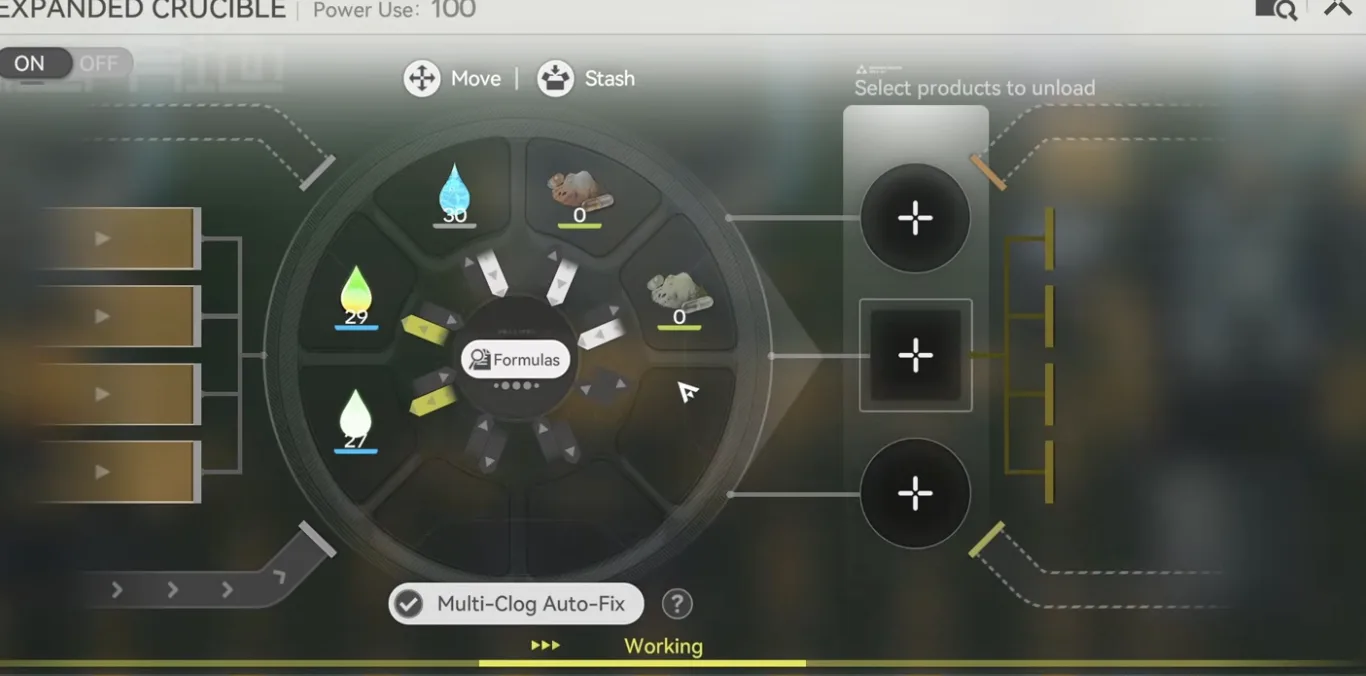
Table of Contents
If you have ever logged back into Arknights: Endfield after a few days away and found your entire Wuling region dark, with every production line stopped and no obvious reason why, you did not misbuild anything. Wuling has a failure mode that a correctly built, perfectly balanced factory can still walk into on its own, because the region’s power supply is chained to a production byproduct rather than a product. Let the wrong item fill your depot and the whole thing unwinds backwards until the lights go out.
This piece is about preventing that. We will cover why the chain breaks, which four items actually cause it, the four ways to stop it, and how to pick the one that matches how often you actually log in.
Endfield Hub is a fan-made resource and is not affiliated with Hypergryph or Yostar.
TL;DR - Key Points
- Sewage is a byproduct, not a product. It falls out of the Refining Unit turning Cuprium Ore into Cuprium, which means nobody produces it on purpose.
- Cuprium is never a catalyst. It is only ever consumed into a finished good, so when those goods stop moving, cuprium stops moving too.
- The chain runs backwards. Cuprium product caps out, refining stalls, sewage dries up, Xircon stops, SC Wuling Battery production stops, Thermal Banks starve, region goes dark.
- Xircon can never self-sustain. It gives back 1 Sewage per 2 Xircon Effluent, but making those 2 Effluent cost 2 Sewage. Net one sewage burned per Xircon, forever.
- Four items are the usual culprits: SC Wuling Batteries, Pyrrolite Parts, Heavy Xiranite, and whichever extra product your base runs.
- The only real item sink is the Expanded Crucible cache wipe, and it needs more than two formulas all clogged at once before it fires.
- The LC Wuling Battery is the decoupled option. Xiranite plus Dense Originium Powder, no sewage, no cuprium, 1.6K power instead of 3.2K.
- The PAC hides it. The Protocol Automation-Core shuts down AIC logistics after a stated maximum of 7 days away, which is why most players never see the deadlock complete.
- Valley IV never does this, which is why the problem catches experienced players by surprise the first time.
The Failure Nobody Sees Coming
The frustrating part is that this failure gives you no warning and no error. Your ratios are fine. Your belts are fine. Your power headroom was comfortable the last time you looked. You come back, and the region is off.
It is also not a slow decline. Everything runs at full speed right up until the moment the last stored battery burns out, and then the base drops all at once. If you were routing depot unloaders into your packaging units instead of into your Thermal Banks, you do not even have a reserve to cushion it.
The players who hit this most often are not beginners. They are people who just changed something. Swapping a production line, adding a new craft, or retiring an old one all quietly change how much cuprium your base consumes per minute, which changes how long it takes the downstream products to cap. Do that without thinking about it and a base that survived three weeks of neglect suddenly cannot survive four days.
It is worth being precise about the cause, because the instinct is to go hunting for a broken belt and there is nothing broken to find.
Why Wuling Power Is Tied to a Byproduct
Your Wuling factory loses power because sewage is a byproduct, not a product. Sewage comes from refining Cuprium Ore, and cuprium is only consumed into finished goods. Once those goods hit the depot cap, cuprium stops moving, sewage stops, Xircon stops, and the SC Wuling Battery line that feeds your Thermal Banks goes dark.
Here is the full chain, in the order it actually fails:
| Facility | Inputs | Outputs | Time |
|---|---|---|---|
| Refining Unit | Cuprium Ore 1 (30/min) + Clean Water 1 | Cuprium 1 + Sewage 1 (30/min) | 2s |
| Reactor / Expanded Crucible | Liquid Xiranite 1 + Sewage 1 | Xircon Effluent 1 + Inert Xircon Effluent 1 | 2s |
| Reactor / Expanded Crucible | Xircon Effluent 2 (60/min) + Ferrium Powder 1 | Xircon 1 + Sewage 1 + Inert Xircon Effluent 1 | 2s |
| Packaging Unit | Xircon 5 + Dense Originium Powder 20 | SC Wuling Battery, 6/min | 10s |
| Thermal Bank | SC Wuling Battery, 1.5/min | 3.2K power, 40s burn | - |
Read that third row carefully, because it is the line people misread. Xircon production does return sewage, one per craft. But each craft eats two Xircon Effluent, and producing two Xircon Effluent cost you two sewage in the row above. So the loop returns half of what it spends. Net cost is one sewage per Xircon, permanently. No amount of clever piping makes the Xircon line self-sufficient; it always needs sewage coming in from outside, and that outside source is cuprium refining. The only alternative anyone has found is the Test Area route, and the Purification Node’s 30:1 sewage conversion is nowhere near bulk enough to replace a Refining Unit running at 30 per minute.
Now the part that turns a throughput question into a shutdown. Cuprium is never a reactant that passes through a machine and comes out the other side. Every recipe that touches it consumes it into something else: Heavy Xiranite, Pyrrolite Parts, Chubby Lung, bottles, syringes. So the moment every one of those finished goods is sitting at its depot cap, nothing pulls cuprium, the Refining Units stop, and sewage production goes to zero. The battery line does not fail because it ran out of Xircon. It fails because something three steps away stopped selling.
Valley IV has no equivalent. Valley batteries come from materials you produce deliberately, with nothing in the chain waiting on a downstream product to clear. That is why a Valley IV factory happily survives being ignored and a Wuling factory sometimes does not.
For the narrower version of this same coupling inside one production block, the localized Xircon and Heavy Xiranite deadlock covers a build that breaks the two lines apart from each other.
The Four Items That Actually Clog You
You do not need to audit every item in your depot. In practice four things share the cuprium lines, and one of them capping is what starts the cascade.
| Item | What it ties up | What stops when it caps |
|---|---|---|
| SC Wuling Battery | Consumes the sewage your Xircon line converts | Sewage consumption drops, which stalls two cuprium lines and slows Pyrrolite |
| Pyrrolite Parts | The single biggest cuprium consumer in most late bases | Roughly 90% of the cuprium line, which kills sewage and therefore batteries |
| Heavy Xiranite | Two Separator Core lines feeding off cuprium | Those two Separator Core lines, which clogs two cuprium lines behind them |
| Your extra product | Yazhen Syringe, Jin Cao Tea, Hetonite Parts, or Chubby Lung, depending on the build | Two cuprium lines, same cascade as the others |
The nastiest one is the first. A capped battery depot is self-reinforcing: batteries stop being made because sewage stopped, and sewage stopped partly because batteries stopped consuming it. Once you are in that state the base will not dig itself out, even after the region has been dark for hours.
Pyrrolite Parts is the one to watch if you run a modern mega base, simply because it consumes more cuprium than anything else you have. At full tilt it takes days to fill, which is exactly long enough to lull you into thinking it never will.
Prevention 1: Build a Real Item Sink
Endfield has no dedicated trash building. What it has is a toggle on the Expanded Crucible, and the in-game description tells you precisely how it behaves:
When an Expanded Crucible cache is simultaneously running more than 2 production formulas and all of them are clogged, this option will automatically remove all items from the cache to fix the multi-clogging and let production proceed normally.
That is the whole mechanic, and every detail in it matters.
“More than 2 production formulas” means three or more. This is why community trash bin designs feed the crucible Yazhen and Jin Cao solutions alongside the item you actually want destroyed. Those two crop recipes are not there for their output; they are cheap carriers whose only job is to be the second and third formula. Send a single junk item into a crucible on its own and nothing ever fires, because one clogged formula is not a multi-clog.
“All of them are clogged” means the wipe waits for the slowest one. Your junk item will clog almost instantly once the depot is full, then sit there while the two solutions catch up. That delay is normal and harmless, and it is the source of most “I built it and it still clogged” reports.
“Removes all items from the cache” is the payload. The crucible does not process the junk, it deletes it, along with everything else sitting in the cache at that moment.
Two practical limits are worth knowing before you build one. First, the junk item must not fill the crucible cache faster than the two solutions fill theirs, or the crucible jams in the wrong state; in practice keep any single item under about 30 per minute into the sink. Second, never feed the same item into the sink from two different belts, which doubles its rate and causes exactly that problem.
We already publish ready made versions of this. The Wuling 1.4.1 overflow protector blueprints cover both the variant that uses the Jingyu Valley sub AIC and the fully automatic one that needs no crops, with the deployment steps and the server specific codes.
Prevention 2: Protocol Stash, Not Depot Loader
A working sink can still fail on its return path, and this is the subtlest bug in the whole system.
The sink needs a way to send items back toward the depot when there is room, and only spill into the crucible when there genuinely is not. If you use a Depot Loader for that return path, you get a nasty edge case: at 89,999 out of 90,000, the loader grabs the last free slot and keeps cycling happily, while your real factory output, which is competing for that same slot, clogs behind it. Your protector looks busy and your base stops.
A Protocol Stash behaves differently. It holds items rather than pushing them straight into the depot, so your actual production lines win the remaining slots, the stash fills up, and the overflow gets destroyed the way it is supposed to. The stash only picks a winner because one of its two output lines starts with a converger, and the converger priority logic explains why that ordering is what decides which line gets served. Swapping the Depot Loaders for Protocol Stashes is the entire fix, and it is worth checking even if you imported a blueprint, because older versions shipped with loaders.
There is one exception. The battery line already ends in a Protocol Stash, and stash to stash timing is unreliable, so that line wants a direct conveyor into the Core AIC instead of another stash in the middle.
One more thing to verify by hand: the Multi-Clog Auto-Fix toggle is per crucible, and older Asia server blueprints did not save the setting when they were exported. If you imported one of those, walk to each Expanded Crucible in your Core AIC and switch it on yourself. The 1.5 mega base overflow protector changes cover both the stash swap and the toggle check in full.
Prevention 3: Decouple the Battery Line
The fixes above keep the cuprium chain flowing. This one removes your power supply from that chain entirely.
| LC Wuling Battery | SC Wuling Battery | |
|---|---|---|
| Inputs | Xiranite 5 + Dense Originium Powder 15 | Xircon 5 + Dense Originium Powder 20 |
| Output | 6/min | 6/min |
| Thermal Bank output | 1.6K power | 3.2K power |
| Burn duration | 40s | 40s |
| Needs sewage? | No | Yes |
| Needs cuprium? | No | Yes, indirectly |
The LC Wuling Battery needs Xiranite and Dense Originium Powder, and nothing else. There is no sewage in its chain, no cuprium, and therefore no way for a capped Pyrrolite depot to reach it. It is half the power per battery, so a 7,000 power base needs roughly twice the packaging throughput, but gas-era facilities pack densely enough that adding two more LC lines is usually cheaper in space than building and maintaining a sink.
This is the option most people forget exists. It is easy to treat the SC battery as a straight upgrade you graduate to, when really it is a trade: more power per unit, in exchange for hard-wiring your power supply to your selling habits. If you run SC batteries purely because they are the higher tier, and not because you needed the density, moving back down is the single most effective thing in this article.
You can still keep SC lines for selling while running LC for power. The two are independent, and nothing forces your Thermal Banks and your outpost stock to use the same fuel. If you want to size the result properly, the D.I.G.E. power calculator does the Thermal Bank cycle math for a given wattage target.
Prevention 4: Keep Cuprium Moving
The lowest-tech fix is to make sure the products never cap in the first place, which means selling them.
Pick a cuprium-derived product with real sell throughput and route it to your outposts for Wuling Stock Bills. Pyrrolite Parts are the standard answer because the demand side absorbs a lot of them, and Chubby Lung sells for more per unit if your base is set up for it. The point is not which one, it is that something downstream of cuprium is being drained continuously rather than just accumulating.
Two details make this more reliable than it sounds. Outpost demand scales with your outpost level, so a Level 4 outpost consumes enough per hour that a well sized line genuinely never caps. And you do not have to sell: moving surplus into the Valley IV depot through Metastorage frees Wuling depot space just as effectively and destroys nothing, which matters if the item is something you would rather keep.
The Wuling Stock Bill guide covers which products are worth the outpost slots and how the trading economy prices them.
The honest caveat: this fix depends on you. It works perfectly if you log in and trade regularly, and it fails the moment life gets in the way, which is precisely the scenario the other three fixes exist for.
Which Fix Do You Actually Need
You almost certainly do not need all four. Pick by how you actually play, not by how you intend to.
| How often you log in | What caps first | Fix you need | Effort |
|---|---|---|---|
| Daily, and you trade | Nothing | Prevention 4 alone, you are already doing it | None |
| Every 2 to 3 days | Your extra product, then batteries | Prevention 4, plus a reserve stash of batteries | Low |
| Weekly | Pyrrolite Parts, then everything | Prevention 1 and 2, a real sink | Medium |
| Build it and walk away | All four items | Prevention 1, 2 and 3 together | High |
| You just changed a production line | Unpredictable, the timing shifted | Recheck your sink, or switch to LC | Low |
Note the last row, because it is the one that catches people. Changing what your base makes changes how fast cuprium gets consumed, and therefore changes which product caps first and when. A protector configured for your old build may now be pointed at the wrong item.
One genuine piece of good news: the Protocol Automation-Core usually gets there first. The PAC manages your factory while you are offline but, in its own words, “will shut down the AIC logistics for safety considerations if you are absent for too long”, with the cap stated in game as a longest auto-management duration of 7 days. If you are away long enough for every cuprium product to cap, the base has often already parked itself for that reason instead. That is why this failure is rare enough to be surprising, and why it is worth understanding rather than worrying about.
Already Blacked Out? How to Restart
A dark Wuling base is a chicken-and-egg problem: you need power to make Xiranite, and Xiranite to make the batteries that make power. Break the loop from outside.
Fastest route: transfer Valley IV batteries through Metastorage and feed them directly into a Thermal Bank. Valley IV is unaffected by any of this, so it always has stock. A handful of batteries buys you enough uptime for the Xiranite and battery lines to spin back up on their own.
If you have no transfer stock: Originium Ore still works. It is the least efficient fuel in the game, but a miner feeding a single bank produces enough to restart the chain.
Then clear the actual blockage. Sell the overcapped cuprium products to your outposts, or delete them from your depot directly. Cuprium starts being consumed again, the Refining Units restart, sewage flows, and the Xircon and battery lines come back without further help. If you skip this step you will simply black out again once the imported batteries burn through.
Then stop it recurring. Keep one standalone Thermal Bank on a dedicated Originium miner as a permanent pilot light, and hold a Protocol Stash of reserve batteries that is not routed into packaging. Both are cheap insurance that turn a full blackout into a brief dip. The AIC factory guide covers the power chain and Thermal Bank scaling side of that setup in detail.
Common Mistakes and Pitfalls
Feeding the sink too hard. Pushing more than about 30 of one item per minute into the crucible fills its cache before the carrier solutions fill theirs, and the wipe never fires cleanly. Throttle it.
Feeding the same item from both belts. This is the same mistake wearing a disguise. Two belts of one item doubles the rate into a single cache and produces the identical symptom.
Leaving Multi-Clog Auto-Fix switched off. It is per crucible and some older Asia blueprints did not preserve it on export. A trash bin with the toggle off is just an expensive box.
Treating a Protocol Stash as overflow protection. It buffers, it does not delete. It is a necessary part of a sink, not a substitute for one.
Balancing ratios perfectly and never selling. Perfect ratios guarantee your products accumulate at a predictable rate. They do not stop the accumulation. Balance is not a fix for a cap.
Routing depot unloaders into packaging instead of Thermal Banks. This quietly removes your battery reserve, so instead of a slow brownout you get an instant, total shutdown.
Assuming the fix survives a redesign. Every time you add or remove a cuprium consumer, revisit which item caps first.
Watch List: What Would Change This
A real item sink building. The crucible cache wipe is a repurposed bug-fix feature, not a designed sink, and the community has been asking for a proper one since 1.2. If Hypergryph ships an incinerator or a disposal unit, every trash bin build in the game becomes obsolete overnight.
Any recipe that makes cuprium a catalyst. If a future patch adds a recipe where cuprium passes through rather than being consumed, the entire cascade stops existing. One recipe would do it.
Depot cap increases. Higher caps do not fix the coupling, they just move the deadline. Worth tracking anyway, because it changes which of the four fixes you need.
The PAC auto-management window. The 7 day cutoff is currently doing a lot of quiet work hiding this failure. If a patch extends it, far more players will meet the deadlock, and the item sink stops being optional for anyone who plays in bursts.
The third region. Wuling stays active when you move on, assuming it is the last non-new region you visited. A dormant Wuling that is not being traded is exactly the neglected factory this article describes, so whatever you build now is what will be running while you are somewhere else.
Final Read
This is not a ratios problem and it will never be solved by recalculating belts. It is a topology problem: your power supply sits downstream of a byproduct, and that byproduct sits downstream of whether you remembered to sell something. Any fix that works has to break that link, either by destroying the surplus, by draining it, or by moving your power off the chain entirely.
If you log in daily, you have already solved it and can ignore all of this. If you want a base that survives being forgotten about, build a sink, put Protocol Stashes on its return path, and seriously consider running LC Wuling Batteries for power while you sell the SC ones. And keep one Thermal Bank burning Originium in a corner, because the cheapest fix for a blackout is never having a complete one.
The full endgame blueprint collection has the builds that implement all of this, updated per patch.
FAQ
Why did my Wuling factory lose power overnight?
Almost certainly because a cuprium product hit its depot cap. Sewage in Wuling is a byproduct of refining Cuprium Ore, and cuprium only ever gets consumed into finished goods. When those goods stop being consumed, refining stops, sewage stops, Xircon stops, and the SC Wuling Battery line that feeds your Thermal Banks goes dark. It is not a ratio error, so recalculating your belts will not find it.
Why does this never happen in Valley IV?
Valley IV batteries are made from materials you produce on purpose, with no byproduct in the chain. Nothing upstream of them depends on something downstream still being sold. Wuling is the first region where your power supply is coupled to your selling cadence, which is why a Valley IV factory survives a week of neglect and a Wuling factory sometimes does not.
What is the Expanded Crucible Multi-Clog Auto-Fix?
It is a per-crucible toggle. The in-game description reads: when an Expanded Crucible cache is simultaneously running more than 2 production formulas and all of them are clogged, the option automatically removes all items from the cache to fix the multi-clogging and let production proceed normally. That cache wipe is what community trash bin builds use as an item sink.
Why does a trash bin need two crop solutions running alongside the junk item?
Because the wipe only fires when more than two formulas are running and all of them are clogged. One junk item on its own is one formula, so nothing triggers. Yazhen and Jin Cao solutions are cheap carrier recipes that reliably clog on their own, which gets you to three simultaneously clogged formulas and lets the crucible flush everything, junk included.
Can I use a Protocol Stash on its own as overflow protection?
No. A Protocol Stash buffers, it does not delete. It holds items back instead of shoving them into the depot, which is exactly what you want on the return path of a sink, but once the stash itself fills up the line behind it still clogs. You need something that actually destroys items, which in the current game means the crucible cache wipe.
Should I switch to the LC Wuling Battery?
If you log in rarely, yes. The LC Wuling Battery is made from Xiranite and Dense Originium Powder only, so it touches neither sewage nor cuprium and cannot be taken down by an overflow anywhere else in your base. You get 1.6K power per 40 second burn instead of 3.2K, so you need roughly twice the packaging throughput, but the line is immune.
How do I restart a factory that has already gone dark?
Get any fuel into a Thermal Bank to break the chicken-and-egg loop. The fastest route is transferring Valley IV batteries through Metastorage and feeding them directly into a bank. Originium Ore works too if you have a miner near a bank. Once power is back, sell or clear the overcapped cuprium products so refining can resume, and the sewage chain restarts on its own.
Does the PAC auto-management cutoff save me from this?
Usually, and that is exactly why most players never meet this failure. The Protocol Automation-Core runs your factory while you are away but shuts down AIC logistics if you stay absent too long, and the in-game cap reads: Longest auto-management duration: 7 days. A well fed base takes days to cap every cuprium product, so the PAC cutoff often lands first. The players who do hit the deadlock are the ones who changed how much cuprium their base consumes, because that shifts the cap timing without changing anything visible.
Do I still need an item sink if I sell to outposts every day?
No. Daily selling is a legitimate fix on its own, because it keeps cuprium products moving and therefore keeps cuprium being consumed. The sink exists for people who want the base to survive being ignored. Pick one, do not feel obliged to build both.
Take a Break
Available on desktop
Keep Endfield Hub free
Every calculator, planner and guide here is free, and it stays that way. If something here helped you, $3 a month on Ko-fi or Patreon pays for the hours behind the next patch.